


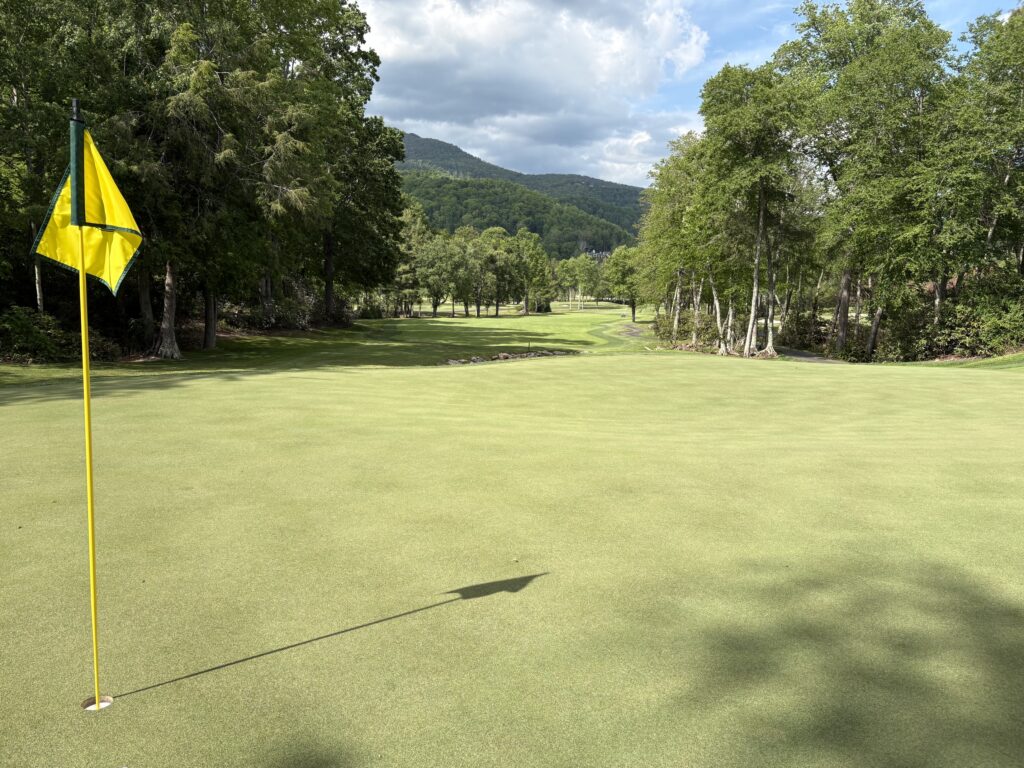
The holes follow the routes they always have since 1985, when Elk River Club unveiled Jack Nicklaus’ first North Carolina Signature Course.
But just about everything on the Banner Elk course, ravaged by Hurricane Helene in September 2024, is new.
That Elk River looked much the same to me a few days ago as it did in 2023 — the last time I played it — is a tribute to Nicklaus Design’s Chad Goetz, superintendent Jamie Jones, the club’s hard-working staff and crew and the dedication of the membership to fund a full-renovation project that may approach $20 million.
“It wasn’t a planned renovation,” said director of golf Dave Ambrose. “There were many challenges from a timing perspective.”
The devastation of Helene required closure of the course for the entire 2025 season, reopening earlier this month. Nicklaus had given the club a long-range plan for updates about a decade earlier.
With the eponymous river winding through the layout, Elk River Club was the hardest hit in the mountainous Boone/Banner Elk area. Much of the course was flooded. Dozens of trees were felled or broken. Roads inside the community surrounding the course were impassible and bridges were washed out.
For a few weeks after the hurricane, the most common way out was by helicopter from the adjacent private airport.
“The membership decided that since we were going to be closed for a full season, we should go ahead and knock out some of the other parts of the plan,” said Ambrose.
Once the wreckage and debris was cleared from the ravages of Helene, the greens were all rebuilt — a few were moved slightly for strategic purposes. The fairways and tees were also rebuilt with a new system of grates and other drainage measures installed throughout the course.
Bunkers were reconstructed with the latest drainage technology — some were moved, in part to adjust for the increase in driving distance by top players over the past four decades. Several back tees were added for the same purpose. The course’s bridges were rebuilt — the new wood railings standout out as one of the few giveaways of new construction.

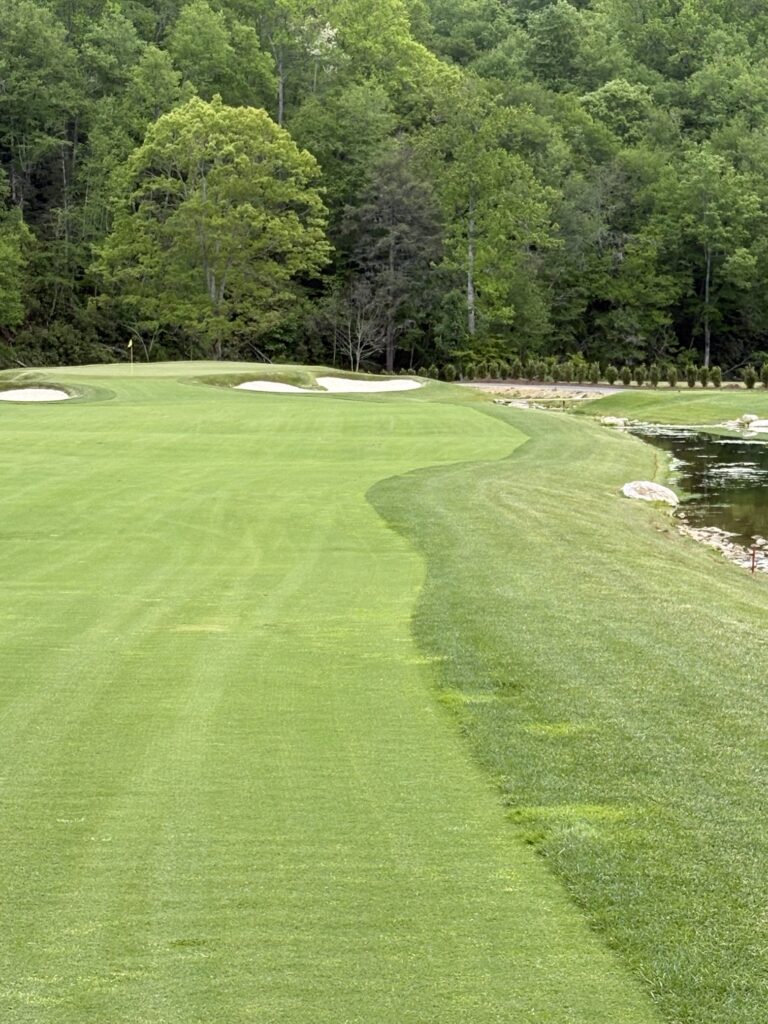
Perhaps, the biggest compliment I can pay Elk River is that the course — as well as the clubhouse and tennis center — looked much the same as I remembered it, though the distance was extended more than 200 yards from the tips to 7,051 yards with a 74.2 rating and a 144 slope. Of course, the 6,357 from the members’ tees was enough for me.
OK, it’s better. A few tees were moved to create more interesting angles. The layout, which winds through a river valley, drains much better, providing drier playing conditions and fewer days of dreaded cartpath-only conditions.
The new greens were tweaked on at least a few holes. Sand capping near the fronts allow players to roll up approaches — an especially nice feature for short hitters, especially with new, firm greens tough to hold for low shots with little spin.
Collection areas and closer mowing around some of the greens provide more short-game options. The putting surfaces feature 007XL creeping bentgrass, the latest for disease resistance and sustainability. Related 007 siblings fill the tees and fairways.
The river valley setting — the back nine includes a few more elevation changes, most notably at the downhill, par-3 15th — makes Elk River unique in the sparsely populated mountains of Avery County, home to four other nationally prominent private courses.
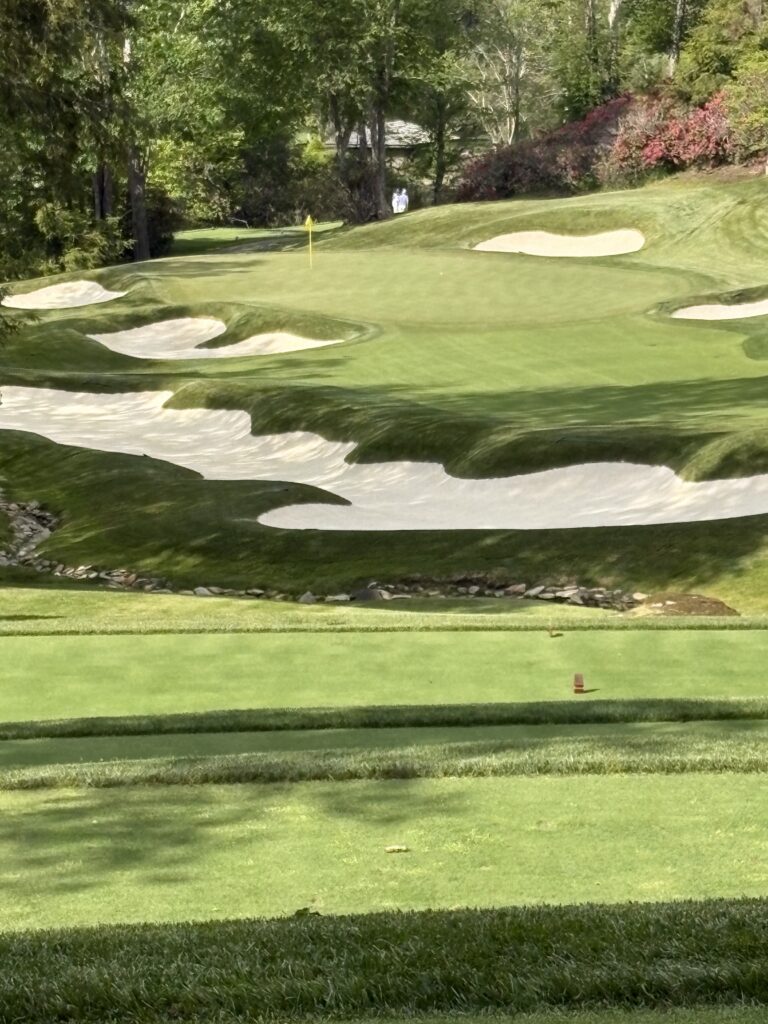
Helene claimed some trees, but it also opened up some mountain sight lines.
The subtle changes begin on No. 1, where the lake on the left of the difficult opening par-4 was given greater definition.
Elk River doesn’t have turtleback/punitive Ross or Maples greens. The Nicklaus targets vary in size. They are fast, but not unmanageable from above the hole.
No. 17, a memorable, short par-4 (only 369 yards from the tips), requires a precise shot over water approach to a green with little depth. Hit it and stop it on the putting surface. Short is in the water. Deep leaves a tricky downhill shot back toward the water.
Other greens are spacious such as at the par-3 12th, where a former three-tiered surface has been moved right and converted to two tiers, leaving a small bailout area to the left.
Improving drainage was already at the top of Elk River’s plans. Most, if not all, the fairways now include metal grates of different shapes and sizes with underground collection areas. The club’s first grates were installed prior to Helene.

With the grates, members can ride the fairways after rains that formerly restrained them to the cartpaths. Ambrose said grates have become a popular addition at many of the nation’s top courses.
Subtle changes with the layout include new tees at Nos. 4 and 5 that provide some bend to holes that previously were straight ahead off the tee. A few pot bunkers were added. The green on the par-5 sixth along the river was raised a few feet.
The seventh, a slightly uphill par-4 (437 yards from the tips, only 358 from the next markers) lost a prominent cherry tree on the right that had tightened the target window off the tee.
The complete reconstruction of greens, bunkers and tees, the new bent grass surfaces on the fairways and greens as well as the much improved drainage have given Elk River not only a spectacular restoration from a natural disaster, but a needed, structural update.
“There was no way I thought we were going to be ready to open in May 2026,” Ambrose said. “To get this done in 18 months is pretty remarkable.”