Sunday, May 3, 2026
spot_imgspot_img
Home Blog Page 46

Cross Creek owners grow membership with investment in staff and facilities

0

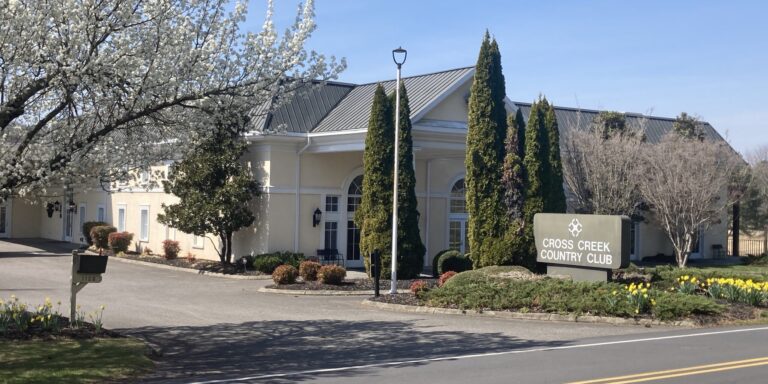
With new ownership dedicated to upgrading the facilities, and a familiar, trusted face running the golf operation, Cross Creek Country Club has gained momentum and rebounded from lethargy.

Tim Brant, a Mt. Airy native who worked at the club at age 16 as a cart attendant, has seen membership and golf revenues rise significantly since returning to his hometown as the golf professional in December 2020, only two months after Skip and Cathy Eckenrod bought the club, which allows outside play.

The Eckenrods owned Interlam, which produced architectural wall panels and design elements, and retired in Mt. Airy.

“They’re spending money on the course and the facilities,” said Brant of the current ownership. “Things are getting done that hadn’t been done in a long time. We’ve got a lot more hands to do things.”

Much of the spending has been on needed infrastructure, beginning with a new clubhouse roof. Brant credits an increased maintenance budget with improving playing conditions.

TJ Waters, who worked at Primland Resort for 17 years, took over as superintendent in 2023. Chef Josh Greenberg was brought in from South Florida to supervise the restaurant, renamed “The Sunset Grille” with seating in various rooms and on the outdoor patio.

The Eckenrod’s daughter, Shannon Myers, the general manager, has made it a priority to increase community events and private gatherings such as weddings at the club, which has a formal ballroom and a large outdoor pavilion (pictured above next to the clubhouse) with space heaters and a fieldstone fireplace.

Myers said that total membership has increased from 290 to 370 — not all include golf — under the new ownership and management.

The pro shop, ballrooms and locker rooms have been renovated.

The 6,800-yard course, designed in 1973 by Joe Lee, who worked with architect Dick Wilson (Bay Hill, Cog Hill) and has more than 100 courses to his own credit, is a challenging, upscale layout playing to a healthy 72.7 rating and a 138 slope with bent greens in the rolling terrain. Greensboro architect Kris Spence made course improvements in 2005.

Non-member play is $55 for greens fees and cart on Monday through Thursday and $65 on Friday, Saturday and Sunday.

Waters inherited a layout with a faulty irrigation system that didn’t allow tees and fairways to be effectively maintained. The bigger budget and fertilizer have helped improve the greens and force out poa annua that had encroached in the fairways. New irrigation pumps are planned in the near future.

Brant, whose other stops have included High Meadows Golf Club in Roaring Gap, Cedarbrook near Elgin and Peninsula Club on Lake Norman, takes a personal pride in the changes.

“In the past, they just let this place go to absolutely nothing,” Brant said. “(The club) is very important to the town. It’s almost like an event center as well. We host a lot of fundraisers, we do a lot of things for the community.”

Greensboro National offers service upgrades, twilight events

0

Greensboro National Golf Club has made changes designed to improve service and guarantee a faster, more enjoyable player experience.

The course, located on the Guilford-Rockingham county line near Summerfield off N.C. 150, now has attendants at its bag drop to greet golfers and get them set for play. The starter will explain the features of the carts’ GPS system and information about the course.

The club will also provide free bottled water during the summer months on coolers built into the carts. The course now has beverage carts consistently circling the course. Food can be ordered through a QR code on the GPS screen and picked up as players make the turn to their second nine holes. GPS will also provide information such as weather warnings. 

After rounds, cart attendants will clean players’ clubs and load them into their vehicles. Such cart service is not common at area public courses.

The course is also holding a variety of nine-hole twilight events each Monday, Tuesday, Wednesday, Thursday and Saturday.

“Golfers will end their day without lifting a finger,” said Bruce Mohler, who was hired as general manager in 2023. “Our bag drop staff loads the golfers’ clubs into their vehicles, providing a terrific ending to what we expect to be the best golf experience possible.”

Mohler said staff would monitor pace of play on the course with the goal for no rounds to exceed 4 hours, 15 minutes.

Tot Hill Farm owner seeks conditions to match Strantz pedigree

0

For many years, Tot Hill Farm Golf Club was a designer course with a budget maintenance budget.

That changed when Charleston golf course owner Pat Barber bought the Asheboro course in December 2022 and closed the course for repairs. Tot Hill Farm reopened in September 22023 with new greens, upgraded cart paths and a new clubhouse, fittingly in a restored old farmhouse.

Since opening in 2000, Tot Hill Farm has received acclaim. Golf Digest has named its third hole the best No. 3 hole in the nation, and just last year, referred to its “moments of sublime brilliance.

And it’s received respect. In 2007, Golf Digest named Tot Hill Farm the seventh-hardest course in America. Though designer Mike Strantz designed only seven courses from scratch — Tot Hill was his sixth — before he passed away in 2005, Golfweek magazine named him one of the “Top 10 Greatest Golf Architects of All-Time.”

Barber’s restoration projects included putting in Prizm Zoysia putting surfaces.

Over the years, Tot Hill Farm hasn’t received enough love — not as much as the scenic, rollicking layout deserves. During a succession of owners and management companies. Since opening in its secluded setting about 10 minutes southwest of the Asheboro commercial area. Tot Hill’s level of maintenance was inconsistent, far below the standard of the layout itself.

Barber owns Charleston upscale public courses The Links at Stono Ferry and The Plantation Course at Edisto.

Barber owns Charleston upscale public courses The Links at Stono Ferry and The Plantation Course at Edisto.

Geoff Dail, a longtime superintendent and course manager in the Triad, led the restoration crew and stayed on to complete some remaining projects and maintain the course. Dail, whose company had managed maintenance during the past few years, helped the previous ownership get together with Barber for the sale.

The broken cart paths have new asphalt. Several tee boxes were leveled, and greens and bunkers were restored. New on-course restrooms were built and bridges were repaired. Many trees that had been encroaching on sunlight for the tees and greens were taken out.

“We kind of retouched everything,” said Barber, who was drawn to Tot Hill Farm by Strantz’s reputation and the natural beauty of the course.

The elevated 18th green sits near the renovated farmhouse that serves as the clubhouse with a pro shop, snack bar and sitting areas. Photo by Carolina Pines Photography

Listed at $110 everyday at all times for greens fees and $25 for cart on its website, Tot Hill’s price may be the highest among public golf courses in the Triad. Barber expects to draw play from the Triad, Triangle and Charlotte as well as visitors to the Pinehurst area.

Forest Oaks thrives with new owners, public play

Five years ago, Forest Oaks Country Club teetered on the brink of extinction. Today, it stands rejuvenated, boasting a golf course and amenities befitting a venue that once proudly hosted a PGA Tour event for three decades, from 1977 to 2007.

Under the stewardship of former members Terry Lee and Eddie Stephens, the Forest Oaks Country Club, nestled in Southeast Greensboro, has undergone a remarkable transformation. Neglected for years, this Ellis Maples-designed golf course has been revitalized through a series of renovations, breathing new life into its once-diminished allure.

On a recent day, Stephens, whose father was once on the club’s Board of Directors, and now runs the day-to-day operations in addition to his “day job” as a certified financial planner, looked out at the course through the dining room’s new large windows and smiled about the club’s resurrection. More than three decades ago, Stephens himself served as the club’s pool manager, underscoring his personal connection to its history.

“It’s been great,” Stephens said, reflecting on the journey since he and Lee acquired the club in August 2019 with a shared vision of restoring its vitality and reestablishing its significance within the community. “We are flourishing.”

NEW OWNERS’ IMPROVEMENTS

Forest Oaks, once hindered by its off-the-beaten-path location, now thrives amidst the promise of impending development, including the establishment of a Toyota battery plant nearby in Trinity.

Lee, a developer and longtime member, and Stephens bought the club after several months of negotiations and have revived Forest Oaks with a combination of love and capital improvements. When they bought the club, it was down to 40 golf members.

Now, the club has 200 full members and 250 social members and accepts public play on the golf course for $55 on weekdays and $65 on weekends, giving guests access to a layout where Greater Greensboro Open (now Wyndham Championship) winners included 15 players with major titles.

“The mix is working,” said Stephens, who said the club is now operating in the black. “To make it work, we have to have public tee times.”

The 1960s-style, brick clubhouse has fresh white paint that replaced a drab beige exterior. The interior has been completely refurbished. The ballroom, once converted into a fitness gym, then left vacant, has been renovated and is again a site for weddings and other celebrations. The kitchen received extensive updates.

The most arduous task may have been replacing the 96 8 x 4 single-pane windows that serve as the walls for the upper level. Over time, the panes had sunk into the wood frames, opening gaps — some big enough to put a finger through. With the new custom-made, double-pane windows, Stephens said the club’s monthly heating bill went from $14,000 to $2,000.

The basement, vacant for several years, has new life with a spacious new members bar with tables for card games, and a golf simulator in a large space ideal for foul-weather practice. A new turn house provides quick food and drink to golfers in the middle of rounds.

Stephens describes the investments as a “multi-million dollar” renovation.

The large, three-section pool has new pumps and filters and is again a hub activity in the summer. The tennis courts have fresh clay surfaces as well as new nets and fencing. A few former hardcourts were converted into six pickleball courts.

The window-filled dining room is open to all during the day and members at night with a private back room looking out over the course. A new back patio with several tables, a product of the COVID-19 epidemic, has continued as a great place to relax with a round of drinks following rounds on the course.

RECOVERY FROM POST-WYNDHAM NEGLECT

Following the loss of the Greater Greensboro Open (GGO) in 2008, Forest Oaks fell into disrepair under JAPANESE ownership, resulting in a decade of neglect, decline, and unpaid debts.

But the ownership was reluctant to sell — Nisshin Corp. asked $5 million for the club in 2008 — while receiving annual payments from the PGA Tour, according to a 10-year deal it had with the club and Wyndham. Though settlement terms were never announced, sources have told Triad Golf Magazine that Nisshin received as much as $6 million while maintaining ownership of the club after the loss of the tournament.

The post-Wyndham decade at Forest Oaks was one of neglect, decline, disrepair, and unpaid debts.

Nisshin hired eight outside management teams after losing the PGA Tour event. One included former NFL player Ricky Proehl, in a group that took over management in 2013 and tried to run it with a fitness club in the ballroom. The property’s gates were locked in 2014 due to unpaid debts by the operators.

But with the tournament payments still coming in, Nisshin was in no hurry to sell, though it dropped the price in the mid-2010s.

“They wanted $3 million,” Stephens said, noting the price was about “double” what the market would dictate. “And, it would cost a lot more to fix everything.”

An arrangement with Integrity Golf concluded with the club’s future seemingly over. A final balloon payment made, Nisshin dropped the price. A Charlotte developer obtained a contract on the property with the intent of building a development with 200 homes and retail.

But that fell through when the developer couldn’t get the necessary water service from the city, which was keeping the needed supply for a nearby megasite user, which eventually came in the form of Toyota.

CLEANING UP THE MESS

That’s when Stephens convinced Lee to step in. Stephens said Lee saw the value of the club to the neighborhood. They paid $1.2 million.

“After watching the club languishing for a decade after losing the tournament, Terry was willing to do it,” Stephens said. “So, we did it.”

Stephens said several of the former operators who leased the club from Nisshin had failed to pay bills, leaving him to deal with creditors, who expected the new owners to pay those bills. That’s why Lee and Stephens bought the land, not the club’s corporation.

The now-lush grounds of the course where the likes of Seve Ballesteros, Raymond Floyd, Sandy Lyle, Steve Elkington, Shigeki Maruyama, and Davis Love III had won PGA Tour events, had glaring bare spots and a mixture of weeds. The lower level of the clubhouse was abandoned, the pro shop had actually been moved upstairs into the dining room.

The new owners prioritized clean-up of areas off the fairways where the course bordered homeowner property.

Formerly, a thriving club with an active local membership involved in many activities, Forest Oaks flailed under the far-away Nisshin ownership. Membership and energy dwindled.

“It had definitely been a family club,” Stephens recalled. “They (Nisshin) treated it like a business.”

With investment in the facilities came increased membership and public play, allowing Forest Oaks to operate in the black despite its modest $1,500 initiation fee and family monthly dues of only $310. And Lee, a successful developer, has invested profits back into course improvements.

The Forest Oaks course is back in well-manicured condition, fitting a PGA Tour host. When an error spreading fertilizer caused significant damage to the course last year, Lee and Stephens got quick help from N.C. State agronomists and a Charlotte firm to aid a quick recovery.

With his business, Lee owns heavy equipment needed for maintenance. His son, Ryan Lee, acts as chief operating officer, overseeing management of the grounds. Another son, Carson Lee, who owns Southeast Land Co., has handled some major projects on the course.

The new owners have renovated many of the course’s bunkers, removed invasive trees, and planted dozens of others. They’ve also improved the condition of tees, fairways, and greens.

Though the Wyndham is happy at Sedgefield, Lee doesn’t rule out Forest Oaks as a future site for a pro event, possibly on the LPGA Tour.

RESTORING A FAMILY ATMOSPHERE

With no experience in owning and running a club, Stephens and Lee decided to find out what the members wanted while keeping with the vision of founder John Hughes, who strove for an “impeccably maintained, championship golf course with country club level amenities.”

The improvements included renovating the original ornate front doors Hughes had hand-chilled with the Forest Oaks logo.

“We’ve tried to honor what he started,” Stephens said. “We’re trying to do things that will make members want to spend more time here. The members that were here before have held us accountable for maintaining a full, old-style clubhouse.”

The feedback includes an advisory board. Stephens said meeting the expectations of the membership and operating a 28,000 SF clubhouse can be challenging.

So far, so good. The swimming pool, tennis courts, and golf course are hubs of activity. The member bar reopened. The ballroom and kitchen are renovated. The restaurant, one of only a few convenient options, is open to the public for lunch. On Friday, the members can enjoy “fine dining.” Sunday afternoon offers a buffet including the club’s popular fried chicken.

“We’re happy that (the success) it’s not all tee-sheet driven,” Stephens said.

With a goal to keep the club a vital part of the community, Stephens said the new ownership has “no intentions to sell.”

“We were two families that didn’t know how to operate a country club,” Stephens said. “We re-invented the wheel. We’ve just now hit our stride.”


Chips and Putts/Renovations set at Maple Chase, Starmount Forest

Renovations of the Maple Chase Country Club course began on March 11. The changes will include a new irrigation and drainage system, the creation of several bunkers — fairway and greenside — as well as the addition of some back tees and some bunker and green moves for strategic purposes.

The north Winston-Salem project started with bulldozing of the driving range (pictured above) along Germantown Road and the closing of the front nine. The back nine was scheduled to be closed in mid-April. The course is expected to reopen in December.

Bob Moore, who has degrees from Wake Forest University and N.C. State and has designed or renovated dozens of courses in North Carolina, California and throughout Southeast Asia, is the architect of the project through his JMP Golf Design Group. Landscapes Unlimited, a golf construction giant based in Nebraska that worked on Old Town Club’s recent renovations, is handling construction.

“It’s a complete infrastructure overhaul,” said Maple Chase pro Paul Allen.

Maple Chase pro Paul Allen said the greens would be replanted in on of a handful of bent grass strains that the club is studying. Some bunkers will be reshaped and added to give them a more “uniform” look throughout the course. The greens, created by “pushing up dirt” for the course’s opening in 1954, will be rebuilt and reshaped by modern standards to allow for proper maintenance.

“The plan is to get everything uniform across the board,” Allen said.

The green on the par-4 third hole will be moved back behind a creek.

SPENCE TO LEAD STARMOUNT FOREST UPGRADES

Starmount Forest Country Club will launch an extensive, eight-month renovation project in January 2025 to include new greens, tees, fairways, bunkers and a new irrigation system.

Greensboro-based architect Kris Spence, whose portfolio includes restoration projects at Sedgefield Country Club, Forsyth Country Club and several other Donald Ross layouts as well as his own designs, is the architect. Spence recently completed an extensive renovation at Woodlake Country Club near Pinehurst and design of the exclusive Quixote Club in Sumter, South Carolina.

Starmount was originally designed by Wayne Stiles and John Van Kleek in 1930. Spence said “Ross influence” is noticeable in several places.

Spence will replace the top four inches on all the greens and do some subtle reshaping, replacing Champion Bermuda with TifEagle Bermuda on the surfaces. The fairways will be reshaped and replanted with TifTuf Bermuda grass, a stable strain that uses water efficiently and has become known for its playability. Mounding that was added to the borders of fairways over the years, will be eliminated.

The tees will be doubled in size and planted with Zoysia. Bunkers will be moved and added to adjust for increases in distance from modern technology.

“We would like it to look and feel like courses did in the 1930s,” Spence said. “It’s going to feel like a new golf course.”

PEGRAM WORKS ON MONROETON

Monroeton Golf Club has nine new greens with nine more on the way. Triad golf professional Tommy Pegram, who designed Crooked Tree Golf Course in Browns Summit and worked on several other Triad courses, is supervising the project at the rural course, which is southwest of Reidsville of N.C. 150.

The first nine opened last year. Pegram said he expects to have the second nine seeded in April and ready for play in June. Pegram said the projects included expanding, reshaping and moving greens as well as work on several tee boxes.

The goal, he said was to give the putting surfaces “more character” and “more interesting,” without making them significantly more difficult.

Pinehurst announces name for its new 10th course

The new 10th course at Pinehurst Resort will have a distinctive name reflecting its unique setting and local history.

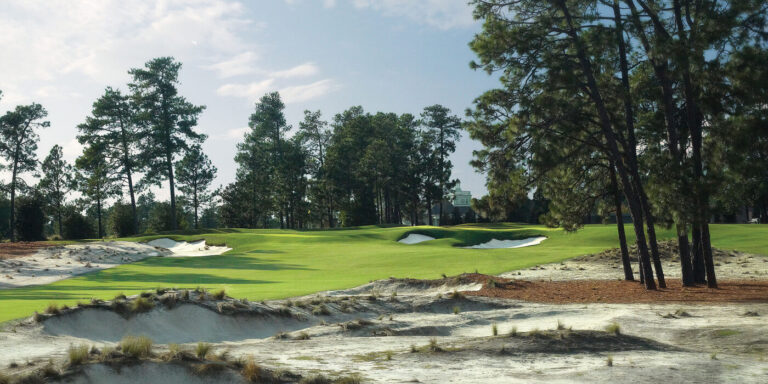
The resort announced the course would be known as Pinehurst Sandmines, though it is still also referred to as Pinehurst No. 10. The course, scheduled to open in May, is routed on more than 900 acres, most wooded and undeveloped.

According to a Pinehurst release, a variety of future developments are being evaluated, including an additional 18-hole golf course, a short course, clubhouse and guest cottages.

“A year ago, we were excited to announce that Tom Doak would begin carving a new era of Pinehurst golf on this exceptional property,” said Bob Dedman Jr., CEO of Pinehurst Resort. “Today, we take another step forward into our continued evolution with a nod to what came before.”

Beginning in the 1920s, the sandy soil proved useful to multiple mining operations, specifically Pleasants Sand and Supply, which was founded after World War II. Over the next half century, sand mined in Aberdeen was shipped along the adjoining railroad for building projects all over the United States, including the Blue Ridge Parkway.

Following Pleasants’ closure in the mid-1970s, rugged dunes, mounds and berms forged from mining excavations were left behind and reclaimed by nature. Doak’s No. 10 includes about 250 acres of the total property.

“There’s a lot of history at this place, and you just want to honor it,” says Angela Moser, Doak’s lead design associate on No. 10. “You want to have it be a part of what you’re building, so you’ll see reminders of it.”

The Pinehurst Sandmines logo (at top) is a rail car, dashed in railroad red color with features of subtle hints about the property’s past – and its future – within the car’s structure and design. The car carries a “matterhorn” shaped mound that resembles the 25-foot sand deposit framing No. 10’s dramatic 8th hole — a signature remnant of the commercial mine’s influence in No. 10’s routing.

“Pinehurst’s past, present and future is right here in the sand,” says Tom Pashley, Pinehurst Resort’s president. “We look forward to seeing what more can be mined in this area.”

Pate, Rivers post top 8 finishes for Wake Forest

Triad golfer Macy Pate tied for eighth playing for Wake Forest in the 54-hole Darius Rucker Intercollegiate at Long Cove Club on Hilton Head Island.

The freshman from Winston-Salem shot 1-over-par 72 in Wednesday’s final round for a 1-under 212 total in a 17-team field with six of the nation’s top 10 teams. The tie for eighth included teammate Brooke Rivers, who closed with 70.

Wake, ranked No. 1 in the latest women’s college rankings, struggled to a tie for 10th with Mississippi State in the team standings.

Arizona State won the team title with a 3-over 856 total, just one stroke in front of Northwestern. 

The top five teams were only four strokes apart with Auburn finishing third, South Carolina fourth and Arkansas fifth.

The tournament was televised each day on GolfChannel.

The four-way tie for medalist at 5-under 208 included Julia Lopez Ramirez of Mississippi State, Jennifer Cai of Northwestern, Hannah Darling of South Carolina and Farah O’Keefe of Texas. Ingrid Lindblad of LSU, the world’s top-ranked amateur finished one shot off the lead.

Auburn wins Wake Invitational at Pinehurst No. 2

UNC Greensboro, which pulled a stunner last year by winning the Wake Forest Invitational at Pinehurst No. 2 (pictured above), wasn’t able to repeat as champions this week.

Auburn shot 12-over-par 852 to win the 54-hole team championship Tuesday by one stroke over East Tennessee State.

Wake Forest finished third at 17-over, one stroke ahead of Duke and Clemson. Northwestern was sixth, N.C. State tied for seventh with College of Charleston at 27-over with Wake Forest’s “B” squad ninth at 29-over. Southern Methodist was 10th at 30-over and UNCG was 11th at 37-over. Iowa rounded out the field at 60-over.

Mats Ege of ETSU and Jackson Koivun of Auburn tied for medalist honors at 1-under 209. 

Scotty Lennon and Collin Adams led Wake at 213 in a tie for sixth place. Symon Balbin led UNCG tied for 25th at 218.

William Love of Duke shot 66 — the low round of the tournament — in the second round and finished fourth at 211. Spencer Oxendine of N.C. State tied for fourth at 212. Wolfpack teammate Nick Mathews of Mebane tied for 22nd at 217. 

Excitement evident for inaugural Myrtle Beach event on PGA Tour

After watching the PGA Tour play the second of two tournaments at the remote Congaree Golf Club in the South Carolina Lowcountry in October 2022, Myrtle Beach Chamber of Commerce CEO Karen Riordan said she asked Myrtle Beach’s mega-golf marketing firm, Golf Tourism Solutions, why the Grand Strand, can’t have a Tour stop. 

After all, Myrtle Beach has long billed itself as the “Seaside Golf Capital of the World.” At the time, Riordan said she considered it a “provocatiive” question.

Riordan received the succinct and surprising reply, “We can.’”

Such was the catalyst for the creation of the Myrtle Beach Classic, set for May 9-12 at The Dunes Golf and Beach Club. Organizers held a news conference Monday at the club to provide updates on the tournament. South Carolina native Jonathan Byrd (shown above at the course), a five-time winner on the PGA Tour and a likely Dunes Club participant, was the featured guest.

For the co-hosts, the Myrtle Beach Chamber and Golf Tourism Solutions, which markets more than 60 Myrtle Beach area courses, the vision is to “showcase Myrtle Beach golf to the world.” The tournament will have two hours of daily TV coverage split between Golf Channel and Peacock.

SportFive, a global sports marketing agency, is managing the tournament.

Only nine months after announcing its creation, the Myrtle Beach Classic is just 10 weeks from its debut. And the response — local and regional — has been wildly enthusiastic.

It took only six hours for 4,000 people to apply online for 1,500 volunteers positions. Those selected come from 20 states. Tournament director Darrin Nelson noted that hospitality suites on the 18th green are sold out, venues on the fairway and tees at 17 are a “near sellout,” as are shared hospitality venues on the two finishing holes. 

Nelson said the 26-team Monday pro-am is sold out, though spots remain for the 52-team Wednesday pro-am. Clubhouse passes are sold out for the first two days. Former PGA Tour player and current TV personality Charlie Rymer, also an S.C. native, will host the pro-am pairings party and handle other duties.

Beginning with this year’s event scheduled the same weekend as the Tour’s higher-profile, limited-field and rich-purse Wells Fargo Championship at Quail Hollow Club, the future in Myrtle Beach seems bright. With so many uncertainties involving the PGA Tour, its future schedules, its sponsors and the planned major investments of the Strategic Sports Group and Saudi Arabia’s Public Investment Fund, Myrtle Beach’s inaugural five-year deal has potential to grow into something much bigger.

In 2024, PGA Tour fans in the Carolinas have an interesting choice: go to Charlotte to watch the Tour’s biggest stars on a major stage, or head to Myrtle Beach for what shapes up as a weekend in the regional’s biggest tourist destination. For golfers, Myrtle Beach offers the appealing combination of splitting time watching at the seaside Dunes Club with time to access playing at the region’s many great public courses.

Tournament organizers have made fun a priority at the Dunes Club, the gold standard among Grand Strand’s for 75 years. Next week, eight YouTubers will battle eight aspiring PGA Tour pros in the “Q at Myrtle Beach” competition at TPC of Myrtle Beach for an exemption into the field. In April, PlayGolfMyrtleBeach’s YouTube page will show a 90-minute highlight package of the the competition. YouTube stars Wesley Bryan and George Bryan VI are expected — Wesley in the field, and George VI battling in the Q for a spot.

Another exemption will go to the individual winner of the March’s General Hackler Collegiate tournament hosted by Coastal Carolina University. 

The pro-am contestants will include North Myrtle Beach native and “Wheel of Fortune” star Vanna White, who will appear at various functions throughout the week. Following rounds on Thursday and Saturday, concerts will be held on the lawn between the clubhouse and the nearby beach. 

A field of 132 will play at the Dunes Club for a purse of about $4 million. In Charlotte, between 70-80 are expected to qualify and play for $20 million.

The PGA Tour faces uncertainty in the LIV era. With the spiraling purse costs, Wells Fargo announced it would end its title sponsorship in Charlotte after this year’s tournament. But that was before, Strategic Sports Group announced a $3 billion investment in the Tour.

A high-ranking official with the Myrtle Beach Classic said the Myrtle Beach tournament was expected to have “plenty of options” in the future.

The Senior (Champions) Tour Championship was played before large crowds at The Dunes Club from 1994-1999. The Myrtle Beach Classic will be the  area’s first event on the regular PGA Tour.

Freshman Pate plays key role in Deacons’ title defense

0

Macy Pate eliminated any doubts she was ready for top-flight collegiate golf in her first round playing for defending NCAA champion Wake Forest.

Pate shot 2-under-par 70 in September at the Annika (Sorenstam) Invitational in Minnesota on her way to a tie for ninth at 6-under 210 in a 12-team field including many of the nation’s top women’s teams.

She went on to finish the fall at No. 33 in the national individual rankings as Wake grabbed the No. 1 team ranking. Plus, she had the thrill of winning the deciding match for the Demon Deacons in the championship round of the Jackson T. Stephens Cup.

Pate compiled a 70.62 fall stroke average, tied for third on the team with All-American Rachel Kuehn. Carolina Chacarra led with 69.62, followed by Mimi Rhodes at 70.38. Pate shot par or better in 11 of 13 tournament rounds and was 2-1 in match play.

“It’s been really fun,” Pate said on a frosty winter day at the Wake Forest Golf Center as she prepared for the spring season. “I’m happy with how I played. I worked really hard in the summer, school came around, and I hit the ground running.”

The highlight of Pate’s season was a 4 and 2 victory over Farah O’Keefe of Texas in the deciding match in the Deacons’ victory over Texas at the Stephens Cup in Dallas. Pate made a 6-foot birdie putt on the 16th hole to clinch the win.

“It was very impressive,” Wake coach Kim Lewellen said.

Only weeks into her college career, Pate found herself in the middle of a celebration on the green after sinking the winning putt. Soon after, she was interviewed (pictured above) by Golf Channel, which televised the tournament.

“We all ran on the green to celebrate,” Pate remembered. “It was super-surreal because it was what I had been dreaming about for years.”

Pate also had a match-play victory in the Deacons’ 3-2 triumph over No. 2 Stanford in another championship round, this one at the East Lake Cup in Atlanta.

Wake Forest golfers join Macy Pate to celebrate after Pate’s clinching birdie putt at the Stephens Cup. (Photos courtesy of Wake Forest Sports Information)

Playing elite competition, the Deacons won three of five fall events, with top four finishes in the other two stroke tournaments.

Though confident after a year of preparing for the adjustment to college golf, Pate said she had a few jitters as she waited for her debut in Minnesota.

One of the nation’s top recruits, Pate was a two-time Carolinas Golf Association Junior Girls’ Player of the Year and a AJGA Rolex All-American. She helped Reagan High to state titles as a freshman and sophomore then skipped high school golf as a junior before graduating a year early to begin at Wake.

“I got here, and I thought, ‘Well, we’re here,’ and I just tried to take it all in,” she said. In Minnesota, “there were a lot of nerves, but it was exciting.”

Pate generated plenty of excitement as a junior, giving the golf world notice by shooting 57 – a feat reported by national and international media outlets — in a tournament at Bermuda Run West as a high school sophomore.

Lewellen was depending on Pate and fellow freshman Brooke Rivers to make successful, quick transitions to college golf. The Deacons have only six players – all six can play in the regulation tournament — on their roster, allowing each player to have a full athletic scholarship and travel to every tournament.

Pate has maintained her momentum so far in the new year. She was the lone Deacon player to go 3-0 in match play as Wake beat Georgetown and San Jose State before losing to South Carolina in a tournament played in Palos Verdes, California.

The national title will be determined in mid-May at La Costa Country Club in Carlsbad, Calif. If the Deacons stay near the top in the rankings, they should have a good opportunity to qualify for La Costa at an NCAA regional at Bermuda Run East.

Despite Pate’s youth, Wake coach Kim Lewellen said Pate has a mature approach to practice and preparation.

Pate said she has maintained a consistent college routine. Class in until 12:15 or so, a short lunch, then four hours of practice, followed by a shower, dinner and classwork.

“She has a routine, and she follows it every day,” the coach said of Pate. “She always has a professional demeanor. With practice, that is what she does and who she is.

Wake’s strong match-play performances may be a product of competitive practices. Pate said practice rounds always include games between the players.

Macy Pate has shot par or better in 13 of her 16 stroke-play rounds at Wake Forest.

Pate and Kuehn, similar in stature and often confused for each other by outsiders despite a five-year age difference, are known for their trash-talking to each other. Pate said she considers the Asheville native, the daughter of former Wake star Brenda Corrie-Kuehn, to be “kind of a big sister” figure.

“If we go out and play, we always have some sort of match going, sometimes two matches going,” Pate said. “We’re super, super competitive. We’re always competing against each other in something.”

Pate said she has enjoyed the celebrations and recognitions afforded the Deacons since their national title victory last June. Plus, it’s made her hungry to be an active part of another championship.

“It’s been fun to celebrate with them, and it’s super-motivating for me to want to go out and win one this year.”

In addition to her teammates and coaches, Pate also has family support only a few minutes away. Her parents, Martha and Chris are only a few minutes away. Close enough for the freshman to drop off her laundry with mom and get a few playing tips from dad. She can also visit her young nephew, who lives in town.

Though slim and only 5-5, Pate averages about 260 yards off the tee – “good enough” – and is consistent in hitting greens in regulation. As her 57 showed, she’s capable of stringing together birdies and eagles.

“I’d say my ball striking is what really helps me right now,” Pate said. “I hit it pretty straight. I don’t miss many greens.”

Though NCAA rules make it possible for Pate to receive NIL deals, including equipment from Ping and apparel from Nike, Pate’s major aspiration is to move on to the biggest stage, the LPGA Tour.

“That’s the goal for sure,” she said. “I’m excited to have 3 ½ more years with both our coaches. It’s nice to be here. We learn things every day from them. At the end of my four years, I should be ready to move on and have success.”