Sunday, May 3, 2026
spot_imgspot_img
Home Blog Page 48

Tot Hill Farm reopens with stately clubhouse, new Zoysia greens, lush conditions

0

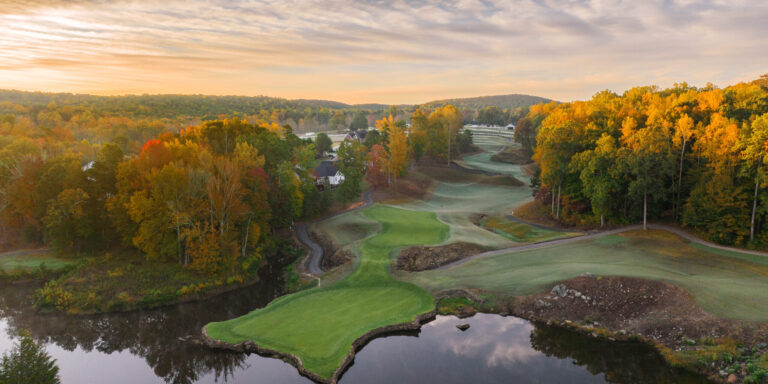
Tot Hill Farm Golf Club has reopened with new greens, upgraded cart paths and a new clubhouse, fittingly in a restored old farmhouse.

Since opening in 2000, Tot Hill Farm has received acclaim. Golf Digest has named its third hole the best No. 3 hole in the nation, and just last year, referred to its “moments of sublime brilliance.

And it’s received respect. In 2007, Golf Digest named Tot Hill Farm the seventh-hardest course in America. Though designer Mike Strantz designed only seven courses from scratch — Tot Hill was his sixth — before he passed away in 2005, Golfweek magazine named him one of the “Top 10 Greatest Golf Architects of All-Time.”

The par-4 third hole at Tot Hill Farm has been recognized as one of the nation’s best. Photo by Ryan Barnett

On Labor Day, the Asheboro course had a soft reopening after several restoration projects, including an old farmhouse now a clubhouse and new Prizm Zoysia putting surfaces.

Over the years, Tot Hill Farm hasn’t received enough love — not as much as the scenic, rollicking layout deserves. During a succession of owners and management companies. Since opening in its secluded setting about 10 minutes southwest of the Asheboro commercial area. Tot Hill’s level of maintenance was inconsistent, far below the standard of the layout itself.

The par-3 sixth hole, measuring only 155 yards, features a rock-filled creek that runs down the entire left side. Photo by Ryan Barnett

Pat Barber, the new owner, plans to change that with a multimillion restoration project. In fact, he already has.

After buying Tot Hill Farm in December, Barber wasted little time. The course’s undulating, uniquely shaped bent grass putting surfaces were converted to Prisz Zoysia due to its tolerance of the Piedmont’s hot summers. The Zoysia seemed almost flawless last week, though a little slower than they are planned to be after they’re cut shorter.

Geoff Dail, a longtime superintendent and course manager in the Triad, led the restoration crew and stayed on to complete some remaining projects and maintain the course. Dail, whose company had managed maintenance during the past few years, helped the previous ownership get together with Barber for the sale.

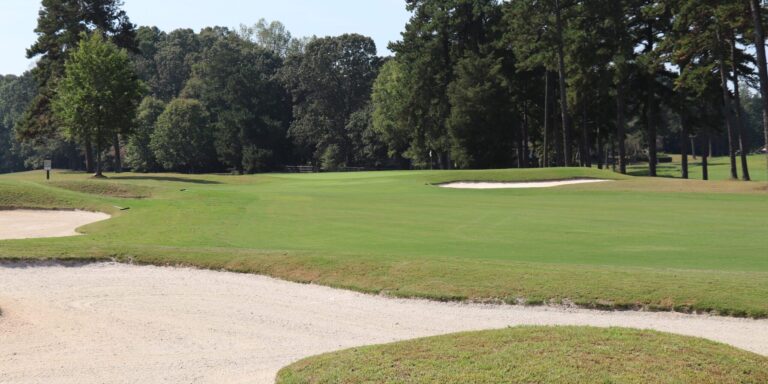
The broken cart paths have new asphalt. Several tee boxes were leveled, and greens and bunkers were restored. New on-course restrooms were built and bridges were repaired. Many trees that had been encroaching on sunlight for the tees and greens were taken out.

“We kind of retouched everything,” said Barber, who was drawn to Tot Hill by Strantz’s reputation and the natural beauty of the course.

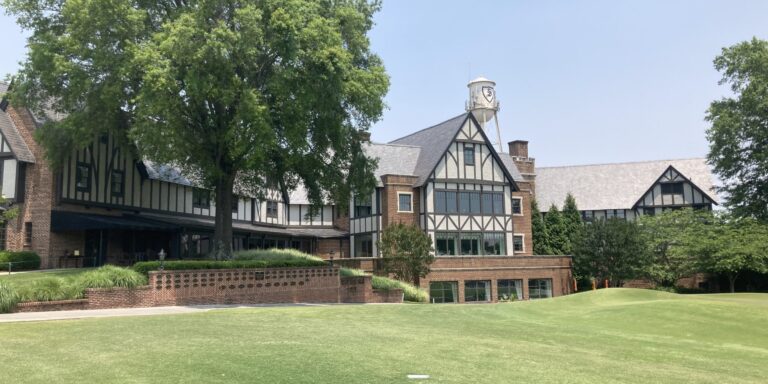
The elevated 18th green sits near the renovated farmhouse that serves as the clubhouse with a pro shop, snack bar and sitting areas. Photo by Carolina Pines Photography

Listed at $110 everyday at all times for greens fees and $25 for cart on its website, Tot Hill’s price may be the highest among public golf courses in the Triad.

The course — less than an hour from Greensboro and Winston-Salem and a little more than an hour from Raleigh —has always been a “bucket list destination golf course,” according to Barber. Plus, the media attention and Strantz’s name have made it a common stop for golfers driving to the Pinehurst area.

Big changes in Myrtle Beach at Pawleys Plantation, Tidewater and Long Bay

0

Pawleys Plantation … Long Bay Club …Tidewater …

If you’re a Triad golfer, you’ve probably played the above listed Myrtle Beach golf courses. If you haven’t, you should – they are a trio of the top accessible layouts on the Grand Strand. Pawleys Plantation and Long Bay are the only Jack Nicklaus designs on the Grand Strand.

As we head into the fall season, each of the three courses is either undergoing improvements – or has recently reopened after extensive improvements.

Here’s an individual look at projects after mid-September visits.

PAWLEYS PLANTATION

Starting south, Pawleys Plantation, was one of the Nicklaus designs to get new TifEagle – the strand of Bermuda suggested by the Golden Bear himself – on its restored greens.

Founders Group International, the owner of 21 Grand Strand courses – is finishing up a multimillion renovation of Pawleys Plantation that restored the size (about 48%) of the shrinking greens, redid fairway and greenside bunkers, eliminated 10 sprawling, but mostly cosmetic, waste/sand bunkers and cleared out many small encroaching trees.

The course, which winds through scenic salt marsh and between stately live oaks, is expected to reopen in mid-October.

A new Tahoma 419 Bermuda collar around the greens will separate the fairways from the putting surfaces, making it easy for mowers to see the edges of the putting surfaces, reducing the chances of losing the outer edges to mowing.

New sod has replaced the huge bunker that had stretched from the water in front of the 10th green at Pawleys Plantationfor as much as 100 yards, leaving a difficult approach, especially for high handicapper.s

No, the big live oak in the middle of No. 9 fairway remains, as does the last of three live oaks that have guarded the approach on the par-5 11th.

The course has a cleaner look and should be much more playable for mid-to-high handicappers while remaining a test for better players. Sod has replaced some sand areas that extended as much as 100 yards along the fairways. New greenside bunkers, with capillary concrete drainage systems, provide a challenge on approaches.

General manager Riley Kinlaw said Jack Nicklaus visited the course in 2018 to help plan the changes.

“The teeth of the course is still there,” said Kinlaw said, noting that the elimination of long waste bunkers would help high handicappers the most.

The sand removal is most obvious at No. 10, a short par-4 where sand stretched more than 100 yards from fairway, serving as a major obstacle for high-handicappers who were faced with a forced carry over water from the sand to a green more than 100 yards away.

Several holes at Pawleys Plantation have lush sod in places where sand terrorized high handicappers.

The dike that serves as the tee box for the par-3 13th and 17th holes remains, but a small section of tee box has been removed to make the designation between the tee boxes easy to see and provide additional room for carts when both tees are occupied.

A new addition, including an outdoor deck, has been built for the snack bar/19th hole. Cart paths, bridges and restrooms were included in the renovations.

Kinlaw said he expects the updated Nicklaus layout to rank with TPC Myrtle Beach and Grande Dunes Resort Club at the top of the Founders Group pecking order, which also includes Long Bay Club and King’s North.

“This is going to be, in my opinion, one of the best courses in the area, if not, the best course,” Kinlaw said.

LONG BAY CLUB

Founders Group’s work at Long Bay consisted mostly of new TifEagle putting surfaces, replacing Champion Bermuda grass planted 17 years earlier at the course off S.C. 9 in Longs. Other renovations were made, including the updating of bunkers and cart paths.

Closed May 22 and reopened August 12, Long Bay also had Tahoma 19 collars installed to help maintain the size of its putting surfaces.

Some removal of trees and overgrowth are noticeable on Nos. 13-15, arguably Long Bay’s most scenic stretch of holes that meander around a creek.

Golf professional Brandon Mensinger said poa annua and other grasses had gradually encroached on the greens, which were restored to about 110,000 square feet from the 66,000 SF they were before the restoration.

“We did really well. With the heat and humidity, we couldn’t have asked for much better,” Mensinger said.

TIDEWATER

Not much has changed on the surface at Tidewater, and that’s by design, according to new owner Kemper Sports, which paid a reported $6.75 million – yes, the property is spectacular – in August for the course.

Like Pawleys Plantation, Tidewater is blessed with breathtaking scenery, a challenging design and a big reputation.

Though the course has matured a bit over the past three decades, and more homes are visible, though mostly far from play, the Cherry Grove Beach course has retained much of the momentum it opened with in 1990.

Tidewater’s reputation as one of the Grand Strand’s elite courses made it especially attractive to Kemper Sports, which operates about 100 public and private courses in the U.S., including Bandon Dunes, Streamsong and Chambers Bay.

The par-3 third hole at Tidewater requires a short, but accurate shot to a two-tiered green perched above Cherry Grove Inlet.

With holes meandering through wetlands along Cherry Grove Inlet separating the course from the beach and the Intracoastal Waterway, Tidewater is special. For years, in various surveys, golfers have rated the par-3 third and par-4 fourth holes along the inlet as two of the Strand’s best holes.

“This is an ‘ain’t broke, don’t fix it,’ situation,” Jeremy Goldblatt, chief operating officer of Kemper Sports, told Triad Golf. “We’re not trying to change things drastically right now.”

In North Carolina, it manages Sequoyah National in Whittier. Tidewater is Kemper’s first course in South Carolina.

“I don’t know why we haven’t had more penetration in the Carolinas,” Goldblatt said. “There’s a chance for this to be a little beachhead. We’d love to grow and find other (Carolinas) properties.”

Without Wyndham, Glover might be playing for PGA Tour survival rather than $18 million

The 2023 Wyndham Championship will go down as one of the most memorable PGA Tour events of the year.

Not just to those of us in the Triad, who look forward to our annual tournament at Sedgefield Country Club. But also, to millions of pro golf fans throughout the world.

We can thank Lucas Glover, who has been an inspiration to those of us who quake at the prospect of 2-foot par putts and dawdle after missing putts, waiting to shame their playing partners into conceding what’s left over as a gimme.

If you thought Glover’s surprise victory in the Wyndham was amazing, you’d have to agree that his follow-up victory this past weekend in Memphis was miraculous – not only that he beat most of the world’s top players, but that he won because he was the best putter in the tournament.

The Wyndham is where Glover came into the spotlight as the PGA Tour’s inspirational story of the year and began his climb to what has already been an incredible stretch run .

No. 180 on the Tour’s FedExCup points list a few months ago, the 43-year-old Greenville, South Carolina, native, is now 4th on the list. He was No. 112, two weeks ago when he came to Sedgefield for what most in the golf world figured to be his last regular Tour event of the year. His fate seemed to be trying to hold onto his playing privileges (the top 125) at the new FedExCup Fall Series, not advancing to the $75 million playoffs.

For a golfer, there’s nothing more gut-wrenching than to miss a short putt that most players would consider a routine tap-in. It effects every part of your game. You start worrying about leaving long putts or missing greens that will require and up-and-down for par. Many of us know. We’ve been there — and some of us are still there.

Since joining the Tour more two decades ago, Glover has been known as one of the best ballstrikers on the Tour, and probably the worst putter. That’s a combination that would have driven a lot of players crazy with frustration, caused them to quit. He said as recently as this spring, he considered putting left-handed.

Little more than two months ago, Glover missed an 18-foot putt for par at a qualifier that cost him a spot in the U.S. Open, the tournament that provided him a brief window of previous fame when he won it in 2009.

As it turned out, Glover didn’t qualify to play in any of this year’s four major championships.

But Glover refused to give up. He finally found a cure for the yips – an ugly extended putter that takes the jitters out of his stroke. It’s become his magic wand.

He came to Sedgefield with three top six finishes in four events, but that didn’t attract much attention given he was No. 112 on the points list.

The victory at Sedgefield changed Glover’s career arc, and inspired millions of golfers. Without the victory, he wouldn’t have qualified for Memphis. Now, he should be considered among the favorites to win the Cup, an $18 million prize and, just maybe, receive a Ryder Cup invitation.

Glover has made a statement for determination and perseverance for those of us who face knee-knockers on and off the course, whether for bogey or worse, rather than birdie or par.

Don’t give up. Don’t lose hope. You just have to keep trying and find something that works.

Glover’s transformation from one of, if not, the worst putter on the PGA Tour (Tour stats bear that out) into the best at least he was on Sunday at the FedEx Open) has been heartwarming, inspiring, tear-jerking … take your pick.

Sunday at TPC at Southwind, Glover’s normally dependable ballstriking betrayed him. But his putting saved him – time after time. On the back nine, he rolled in par putts of 7, 20 and 11 feet. But his biggest save was a 29-footer for bogey on the par-3 14th after he his tee shot into a pond.

Glover had to make birdie at 16 to pull into a tie with Patrick Cantlay, playing two holes ahead of him, and force a sudden-death playoff. So, each of those were must-make putts.

Just as striking was Glover’s demeanor – it hasn’t really changed. He’s still the guy who signs autographs, greets people he barely knows and talks to on-course volunteers.

He’s friendly, if a bit quiet. He doesn’t wear flashy clothes. He doesn’t make outrageous gestures or tweets to get attention, though he is refreshingly candid when asked his opinion (he didn’t mind openly criticizing the Tour’s cut to 70 players for the playoffs).

Who knows whether Glover can maintain his putting prowess through two more playoff events, much less until next year and beyond. Golf swings and putting strokes are easier lost than found.

Regardless, the golf world has to feel good about Glover’s inspiring transformation from desperation to exhilaration in about two months.

Without the Wyndham, a tournament that the then-top 17 players on the FedExCup points list elected to skip so they could rest up for the playoffs, the feel-good story of the season on the 2023 PGA Tour wouldn’t have happened.

“Two Gloves,” but only one Bryan brother earns 4-spotter slot at Wyndham Championship

Get to Sedgefield Country Club early Thursday if you want to see Justin Thomas, Shane Lowry, Jason Dufner, Stewart Cink and Jimmy Walker play in Thursday’s opening round of the Wyndham Championship.

They should be finished about the time most of us are eating lunch.

Thomas (7:45 a.m.), Lowry (7:45), Dufner (7:01) and Cink (7:23) will each tee off before 8 a.m. Walker goes off at 8:07. But they’ll play later in the day in the second round, accommodating those who skip out from the office early on Friday.

The Thursday afternoon tee sheet includes Davis Cup captain Zach Johnson (12:38 p.m.), Wake Forest University product and two-time Wyndham winner Webb Simpson (12:49), Danny Willett (12:05) and Lucas Glover (12:49). Former Wyndham winners Si Woo Kim and Hickory native J.T. Poston tee off together at 12:49. Former Wake Forest golfer Cameron Young tees off at 12:27.

In the morning, it might be fun to check out Tommy “Two Gloves” Gainey. In the afternoon, fellow South Carolinian Wesley Bryan should be entertaining. Both advanced from a six-way playoff for three spots at Monday’s 4-spotter at Bermuda Run East.

Both are entertaining characters. One of the players Bryan beat in Monday’s playoff was his brother and YouTube co-host George. The Bryans are known for their trick shots and their YouTube trips to various courses. Gainey is a former assembly line worker who taught himself to play wearing two gloves and wielding a baseball grip. He’s had a colorful career.

Not to forget, the Bryans and Gainey were both contestants on GolfChannel’s “Big Break” show. Each player has one PGA Tour win.

The early withdrawals included Davis Love III and Lee Hodges, the winner Sunday at the 3M Open in Minnesota.

The 156-player field will be competing for a purse of $7.6 million, including $1.368 million to the winner.

The withdrawl of defending champion Tom Kim, ranked No. 14 in the FedExCup standings, due to an ankle injury suffered at the British Open left the Wyndham with 68 of the top 100 committing last week, but none of the top 17 in the points race. Si Woo Kim, at 18, is tops among the Wyndham entries.

While the first-place check provides plenty of incentive, the most important issue for the majority of the field is finishing in the top 70 in the FedExCup points race and making next weekend’s first-round playoff stop in Memphis.

Lowry (No. 76 in the standings) and Thomas (No. 79) are the biggest names capable of climbing into the top 70 with good performances this weekend.

Four Triad players begin play at U.S. Girls’ Junior Championship

Mebane’s Emily Mathews, one of four Triad players in the field at the U.S. Girls’ Junior championship, will get a quick look at how her game stacks up in the qualifying rounds Monday and Tuesday for stroke play at the U.S. Air Force Academy Eisenhower Golf Club Blue Course in Colorado Springs.

Mathews is paired with defending champion Yana Wilson of Henderson, Nevada, in an 8:17 a.m. MDT tee time Monday off the No. 10 tee. They will also play together Tuesday afternoon.

Former Reagan High players Macy Pate and Anna Howerton and Greensboro’s Ellen Yu also qualified for the tournament, which begins with two rounds of stroke play, the top 64 qualifying for match play.

On Monday, Pate also begins on the 10th tee at 9:12 a.m. Yu begins on No. 1 at 1:32 p.m. Howerton starts at 1:54 on No. 10. The par-72 course will measure 6,788 yards. The altitude in Colorado Springs reaches more than 6,000 feet.

The tournament will be the final major junior for Pate, Howerton and Mathews, who have each signed college scholarships. In the fall, Pate will play for Wake Forest, Howerton for High Point and Mathews for Virginia Tech.

Katherine Brictson of Raleigh and Ella June Hannant, a 13-year-old from Pikeville, are also in the field for the Girls’ Junior.

The semifinals and finals of the tournament will be aired on Peacock and Golf Channel.

Past champions include women’s golf greats such as Mickey Wright, JoAnne Carner, Nancy Lopez, Hollis Stacy, Amy Alcott, Heather Farr, Pat Hurst, Michelle McGann, Brandie Burton, Inbee Park, Lexi Thompson, Minjee Lee and Rose Zhang.

Wilson beat Gianna Clemente of Estero, Florida – also in the field – in last year’s championship match at The Club at Olde Stone in Bowling Green, Kentucky.

A record 1,677 players entered qualifying sites throughout the country with 38 internationals qualifying.

Howerton finishes junior career strong with Dogwood win, trip to U.S. Girls’ Junior

As a freshman at Reagan High, Anna Howerton wasn’t sure she wanted to play on the high school golf team.

But her father gave her a nudge.

“My dad wanted me to play,” Howerton recalled.

As it turned out, Howerton’s dad probably saved himself a lot of money. His daughter has earned a scholarship to play golf at High Point University, where she will start in the fall.

She’s tuned up in the past year by winning a Carolinas Golf Association event at Mimosa Hills in Morganton and followed with Peggy Kirk Bell Tour victories at Pine Needles and Salisbury.

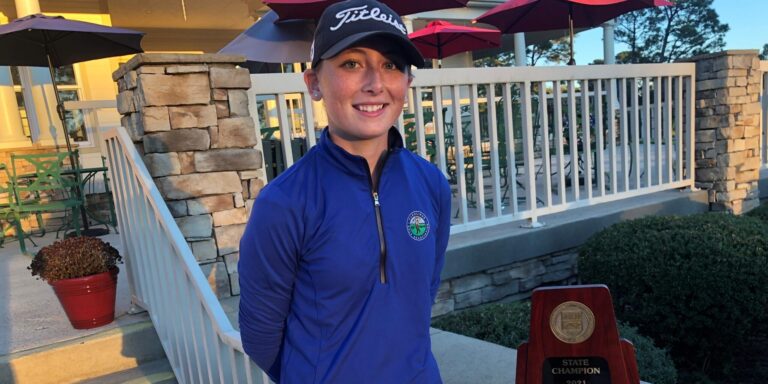
On June 29, Howerton won the CGA Dogwood State Junior Girls at Colonial Country Club in Thomasville, shooting rounds of 71, 76 and 72 to win by two strokes at 6-over-par 219.

Once she agreed to play at Reagan, Howerton said she felt an obligation to improve on a loaded  high school team that included Morgan Ketchum, now the top player at Virginia Tech, and Wake Forest recruit Macy Pate, whose 57 two years ago made news throughout the golf world.

Howerton quickly realized she would have work to make the lineup. She soon found out Ketchum and Pate were on the practice range several hours per day.

Howerton didn’t want to shoot high scores that would hurt the team.

“They motivated me,” Howerton said. “I didn’t want to let the team down. I knew if wanted to play on the team I needed to go out and keep getting better by practicing.”

Howerton got better, emerging as the team’s No. 3 player as Reagan won back-to-back state championships.

Now, its Howerton making news.

Reagan didn’t qualify as the team for the Class 4A state tournament this fall, but Howerton made the field as an individual and finished third with a 74-69, 1-over performance at Pinehurst No. 6.

Next week, she’ll compete in the U.S. Girls’ Junior at Eisenhower Golf Club in Colorado Springs. Howerton and Pate both qualified with outstanding scores at Alamance Country Club. Pate was medalist with 64 and Howerton was third with 68.

Shooting 68 at Alamance, a Donald Ross design, gave Howerton special satisfaction. Though she’s consistent, rarely shooting 75 or above, she doesn’t post as many spectacular scores as her star Reagan teammates.

“It’s nice to be able to take it low once in a while,” said Howerton, who began working with instructor Rickey Sullivan, the director of instruction at The Ranch at Bulls Bay outside Charleston, S.C., in March.

Howerton will make the trip to Colorado with her mom, Missi. She expects to play a few practice rounds with Pate, her best friend at Reagan.

In the U.S. Girls’, players will play two qualifying rounds with the top 64 scores advancing to match play.

Given the dozens of rounds she’s played with Ketchum and Pate, who didn’t play on the high school team as a senior, Howerton doesn’t expect to be intimidated playing in the national tournament. She can drive the ball 250 yards or so – without the help from high altitude.

“North Carolina has a lot of top-notch golfers,” Howerton said.

The field at Eisenhower also will include Ellen Yu of Greensboro, who qualified with 75 at Spring Valley Country Club in Columbia, South Carolina, and Emily Mathews of Mebane, who shot 70 at Williamsburg National in Virginia.

The semifinals and championship will be televised on Peacock and Golf Channel.

Forest Oaks Country Club sees resurgence and adds Golf Gem School

The cofounder and operator of Golf Gem, Jonathan Dudley has taken a unique role at Forest Oaks Country Club and steered in perhaps, a surprising direction. A former GolfTec manager and head professional at Mill Creek and The Valley (formerly Indian Valley), Dudley wanted to return his focus to golf instruction. Dudley, who moved from The Valley in April, has been busy putting his program in place at Forest Oaks, running clinics and camps for juniors and ladies.

Golf Gem cofounder Scott Duerscherl, also a former GolfTec instructor, grew up playing junior golf in Thomasville area will be taking over as the director of instruction at Winding Creek Golf Course. The new revamped practice area will include technology based instruction and fittings, a new lighted driving range, target greens, a new covered teaching studio. In the spring of 2024, the new short game area will be opening. Duerscherl stated, “We try to help make people comfortable on the golf course. We try to help people find their place in golf.”

As for instruction, Golf Gem is focusing on individual lessons, coupled with group training programs to create greater golf community and camaraderie for Golf improvement. We call them “tactical plans” Many of our lesson takers will take two lessons a month and do two training sessions. Golf Gem’s approach to teaching is based on matching the components of your golf swing verses tearing down your entire golf swing. Duerscherl said, “We look at your swing like we look at a car. If you’re a Ford for example, we would want to make sure you have a Ford engine and transmission to match. If components don’t match, we will remove and replace as quickly and seamlessly as possible.”

Over the years our thoughts on individual, golf instruction, have changed, whereby realizing starting on the course or in bigger groups, energizes younger golfers. When they get on the course and they do not perform a certain way, they’re more motivated to train, and when they’re around their peers there often more interested in training And improve quicker as they challenge each other, and find a greater camaraderie. This camaraderie seems to have more staying power as I am seeing golfers who start here enjoy the game more. The individualized approach is often times not as dynamic. Also, competition is always important in the group atmosphere and small competitions provides some weekly excitement”.

At Forest Oaks, Dudley is assisted by instructor Jay Allred, whose Reagan High girls’ teams have won three Class 4A state titles and set seven of eight state records. Golfers have included Wake Forest recruit Macy Pate, as well as Virginia Tech No. 1 player Morgan Ketchum and High Point University recruit Anna Howerton.

But the focus isn’t on finding and developing the next Tiger Woods or doing one-on-one mentoring of elite players. The focus is on helping people understand the different components of the golf swing and make their golf swing efficient and try to fit everyone into the same mold.

Golf Gem’s junior camps for players ages 5 through 14, stress the basics and focuses on giving kids the tools and knowledge to have fun on the course.

The junior camps – next one is scheduled for July 24-27 at Forest Oaks– conclude with a Drive, Chip and Putt competition modeled after the national competition that holds its national finals at Augusta National.

“The main thing for us is just the help the game grow and all three instructors are U.S. Kids Golf Certified,” Dudley said.

The first junior camp in June had 20 kids at Forest Oaks.

“It’s hit the ground running,” Dudley said.

Dudley, once manager of a busy GolfTec location in Raleigh, is also an experienced club-fitter. Golf Gem has strong relationships with Callaway, Mizuno, Srixon, Ping, U.S. Kids and XXIO, a sister company of Cleveland and Srixon that specializes in lightweight clubs for players with slower swings.

“We kind of fit a niche between Golf Galaxy and Club Champion,” said Dudley, referring to the big box golf chain and the upscale club fitter that charges between $100 for a wedge fitting to $400 for a full bag fitting. We can fit clubs on a simulator and on a grass range.

Dudley praised the improved facilities at Forest Oaks, the former home of the PGA Tour’s Wyndham Championship which had suffered several years of instability under absentee Japanese ownership.

But in 2019, Forest Oaks members Terry Lee and Eddie Stephens bought the club and quickly began making improvements to the golf course, the clubhouse, clay tennis courts, fitness facility and the swimming pool.

Now, semi-private, the course’s improved conditioning has helped return the layout to the top tier of Triad courses. Forest Oaks also has an indoor stimulator, a popular winter and rainy-day option.

Superintendent David Stapleton arrived at Gillespie Golf Course about the same time Dudley came to the club. Garrett Smith is the head shop manager.

Dudley has also taken on the role of merchandiser for the golf pro shop, a rare opportunity for an instructor.

“It gives me an opportunity to help them grow their operation,” Dudley said.

With the addition with the Toyota megasite just down 421 and the resurgence of the housing market in the community, Forest Oaks and Golf Gem are poised for significant growth in the future.

Sponsor offers free luxury box upgrades at Wyndham Championship to Rewards Card holders

Enjoying the comforts of a luxury box at the Wyndham Championship is no longer reserved for corporate sponsors and their lucky guests.

Now, Wyndham and the annual PGA Tour event at Sedgefield Country Club are making it easy by offering Wyndham Rewards Earner Card holders with a grounds pass a free upgrade to a 17th green luxury box complete with the same open bar and food available to other hospitality boxes.

The Wyndham Rewards Earned Card Lounge is perhaps the most noticeable addition to the hospitality at the tournament, scheduled for Aug. 2-6.

Tournament Chairman Bobby Powell called the Earner Card Lounge the tournament’s “new, shiny penny,” and expected it be a popular addition to tournament week.

“We’ll try that out this year and see how it goes,” Powell said.

Don’t have a Wyndham Rewards card? You can sign up for on at the tournament and get the upgrade. Non-card holders can gain access to the box for a daily fee of $375.

As of June 8, Wyndham Championship Executive Chairman Mark Brazil said only a few hospitality spots remain available – boxes on the 17th and 18th holes with a combined seating for about 60 guests. Brazil said boxes on Nos. 15 and 16 are sold out.

Grounds passes went on sale early this month. The weekly pass, good for Wednesday through Sunday, are $250. Daily passes to the four tournament rounds are $60 on Thursday, $65 on Friday, $70 on Saturday and $65 on Sunday. The passes can be purchased online at https://www.wyndhamchampionship.com/spectators/tickets/.

A grounds pass includes admission and access to all public areas & attractions, including Margaritaville,Truist Fan PavilionSunbrella® Wine DeckTito’s Stillhouse, Clyde May’s Barrel House and Sunbrella Comfort Zone.

Proceeds from the Wyndham Championship benefit local charities, including Birdies Fore Backpacks, which provides food and other necessities to Triad kids.

Though Brazil and Powell don’t expect LIV Tour players to be eligible to return to the Wyndham Championship until 2024, the Greensboro field should be one of its best in years, thanks in part to the PGA Tour’s 20-event requirement for “top players” implemented this year.

The field is expected to include defending champion Tom Kim, who shot 61 in the final round to win last year at Sedgefield.

Players have until the Friday prior to the Wyndham to commit to the Greensboro tournament.

Old Town Club expects to reopen in September after renovation

The highly acclaimed Winston-Salem course closed April 16 to make several structural improvements, including the change of the surfaces of the undulating greens from bentgrass to bermudagrass Tif-Eagle.

The club will also complete installation of the Better Billy Bunker system in its 80 sand bunkers, improve cart paths and complete other updates around the course and club, including the patio, swimming pool and tennis courts.

Golf chairman Dunlop White III did not provide an estimate of the costs.

White said the club hopes to have the golf course open by Sept. 1. During the project, White said the club has arranged for its members to play at other clubs, including nearby Forsyth Country Club and Maple Chase Golf and Country Club.

Designed by Perry Maxwell in 1939, Old Town is the only Triad course to make the latest lists of top 100 U.S. courses by Golf Magazine and Golf Digest now ranked at No. 54.

Bill Coore and Ben Crenshaw, who made renovations to the course in 2013, are handling the current project. Dave Axland, returns as the project manager.

“We feel that our Perry Maxwell contours are iconic and famous, and we want to protect those at all cost,” White told TBJ. “This is not a design renovation. “This is mostly an infrastructure renovation.”

Old Town is ranked No. 38 on Golf Magazine’s latest (2022) list of Top 100 Courses in the U.S.

“With sweeping, cross-course vistas punctuated by tawny native grasses and an exemplary routing that twists around miles of creek beds, side-slopes and artistic bunkering, Old Town’s restoration portrays the enduring spirit of classic golf architecture,” the magazine wrote.

While new courses generally bump older courses down (Pinehurst No. 2 dropped from No. 6 to No. 12 in Golf Digest and from No. 11 in Golf Magazine to No. 29) the biennial rankings, Old Town rose from No. 41 in the previous Golf Digest list and No. 98 on the previous Golf Digest list.

Maxwell is one of the most revered names in classic course design. His portfolio includes renewed courses such as Southern Hills, Prairie Dunes and Colonial Country Club (Texas).

In the past two decades, Coore and Crenshaw, known for creating classic and natural designs, have produced heralded designs including Sand Hills, Bandon Trails. In North Carolina, the duo has designed Dormie Club in the Pinehurst market and completed renovations on Pinehurst No. 2.

“The Coore and Crenshaw renovation really propelled (Old Town) into a household name,” White gave as a possible explanation.

The club has a longtime affiliation with Wake Forest University and is the home course of men’s and women’s golf teams.

The course is also known for its undulating fairways, which force players to play from a variety of stances.

Though White said 74 bunkers have been converted to Billy Bunker since January and dozens of trees have already been removed while the course remained open.

White said the current small tee box areas will be removed. Instead, a large non-elevated area will be cut, allowing for a variety of tee placements that will help prevent wear and tear on small areas and reduce mowing time.

Though the greens will be expanded, White said no changes to the putting surface’s contours would be made.

White said the Tif-Eagle surfaces will be much easier to maintain during hot, humid summer months.

With the bentgrass greens, Old Town used elevated fans around the green to circulate air flow, and often had to syringe the putting surfaces.

“Our greens were old and soft, and were not performing or draining well,” Dunlop said. “Bermudagrass would provide the membership with better surfaces for more months per year. They should thrive during the period our members enjoy playing the most.”

The change from the popular bentgrass to bermudagrass mini-dwarfs — easier to maintain and much-improved over the years — has been a trend at Carolinas courses for more than two decades. Pinehurst No. 2, a regular U.S. Open venue, made the switch in 2010. Recent renovations at Alamance Country Club and Raleigh Country Club kept their bentgrass greens going with a new Pure Eclipse creeping bentgrass.

The expansion of the greens may be needed to help players keep their approach shots from bouncing or rolling off the putting surfaces because bermudagrass greens are typically harder than bentgrass greens.

White said the new putting surfaces probably will make ball position in the fairway more important to stopping approach shots near the pins.

The Better Billy Bunker systems combines a 2-inch gravel layer with a specialized polymer to create a durable, liner-less system, allowing for better and easier drainage and consistent playing conditions in sand traps.

“We were experiencing washouts and contamination after rain events,” White said.

As part of Old Town’s natural look, White said the new sand in the bunkers will remain Yadkin River sand, rather than the brilliant white “Spruce Pine Sand” favored by Augusta National and many other high-profile courses.

White said that only about 20% of the club’s cart paths are asphalt, and some of those will be rebuilt or rerouted with the intent to provide good access while limiting their visibility.

Golf Scooters increase options and availability

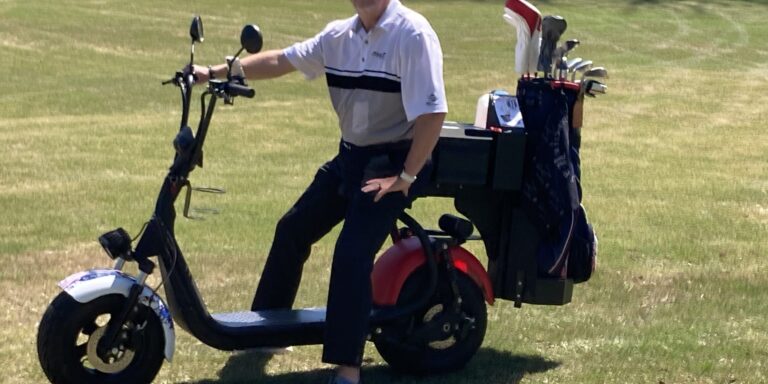
Ron Fobes scoots around the Maple Chase Country Club golf course faster than anyone else without leaving tracks or any trace of evidence on the tees, fairways or rough.

The Maple Chase member is an authorized dealer of Phat Rides, selling scooters easily adaptable for golf course. An emerging product, Phat Rides scooters weigh less than 200 pounds, are easy to ride with 8-inch tires, and have a 2,000-watt electric engine that can travel 50 miles between charges.

Fobes said the scooters don’t have any more impact than walking does on wet fairways — a claim backed up by Maple Chase superintendent Justin Hudson.

“I’d rather have 50 of them (on the course) rather than 50 golf carts,” said Hudson.

Fobes said they don’t leave a mark on greens, either, but knows that seeing him ride on the putting surfaces would rile up fellow members.

The biggest concern mentioned by Fobes and Hudson is the kickstand, which could cause turf damage if utilized on wet ground.

Though the setting in golf mode tops out at 14 mph, the scooter’s speed can be gradually increased through a governor up to 20 mph.

Cruising down a fairway at 14 mph — standing or sitting — is a fun ride. The scooter motor is controlled by a throttle on the right handlebar. A setting allows the scooter to go in reverse. Handbrakes are on both handlebars. Parking is done with a kickstand.

Considered an ebike, Phat Rides scooters are allowed on roads, but don’t require operators to have a driver’s license, buy a license plate or wear a helmet.

Fobes, 57, is a former Nextel sales/operations manager who owned a wireless service. He is gearing up to sell the scooters, priced at about $3,700, to golfers and golf courses, but also to hunters, members of gated communities and recreational users.

“Most people who have ridden one, want one,” Fobes said.

The ‘Caddy’ comes in four models

Phat Rides’ golf model, Caddy, includes a bolted-on bag holder in the rear, a cooler for beverages, and holders for scorecards and sand bottles used to fix divots. The company has two other models, OG and Amp’d. OG is marketed to recreation and street travel while Amp’d includes Boss audio speakers.

Fobes bought a first-generation Phat Rides scooter three years ago. When he brought it to Maple Chase in Winston-Salem, club general manager Shannon Murphy wanted one. With no inventory available, Fobes sold his scooter to Murphy.

Fobes has owned two of the third-generation Caddy scooters, which he uses for demonstrations, for about four months.

His daughter, Mallory, is a senior on the golf team at UNC Wilmington, where she earned first team All-Colonial Athletic Conference honors as a sophomore and junior.

Fobes doesn’t think it will be hard to drum up interest among golfers for the scooter. But gaining supply will be harder. His first shipment of inventory — due later this month — will include 11 — four Caddy models — scooters. For now, a small staff in Phoenix is assembling scooters one at a time.

“My ultimate goal is to start assembling the scooters here to service the Southeast,” Fobes said. “Once we have the supply part, I think we’ll be OK. The product is good — that’s that I keep going back to.”

Fobes hopes to open an assembly site/showroom in Winston-Salem. He owns a 13,000 square foot warehouse at 4411 Cherry St., where he’s operated two small companies, Millennium UAV, a drone provider, and Connect Tech, an IT company.

Fobes also plans to service the scooters. He would also like to set up a leasing system.

“We’re trying to develop a dealer network I am trying to assist with,” Fobes said.

But according to Fobes, only 16% of the 1,000 or so Phat Rides scooters in existence are the “Caddy” model.

Fobes discovered Phat Rides about three years ago at Pinehurst Country Club during a demonstration at The Lily women’s golf weekend. The owner of the scooter offered him a chance to take a short drive around the parking lot.

Fobes, who was looking for a franchise to own, was immediately interested in becoming a dealer, but was told the company, founded about six years ago, wasn’t ready.

“I just kind of kept tabs on them for awhile,” Fobes said.

So Fobes waited. He looked for other franchising opportunities, but couldn’t find a good fit.

“If I could figure out a way to make (a living) in or around the golf industry, I knew that was something I had a passion for.”

Last fall, he called Phat Rides again. He was scheduled for a conference call with CEO Tim Moran the next day.

The timing was perfect. Moran, an investor brought in to run the company in the months since Fobes had seen the product for the first time, had identified the Carolinas, Georgia and Florida as an early target area.

Fobes said Moran, who doesn’t play golf, was particularly interested in other uses for the scooters such as for transportation in inner cities as well as senior and recreational areas. A knobby tire version is marketed to hunters.

Fobes traveled to Phoenix in December to meet with company leaders and see the 44,000-square-foot manufacturing facility.

He quickly jumped aboard. But there was no inventory to sell. Moran said Fobes would have to wait until this month for his first shipment.

When will Phat Rides have the capability to produce enough to sell in large volume?

“I wish I could answer that,” said Fobes, who has reached out on a “cursory” level to several golf course owners. “And that’s one of the reasons I’m not chasing as hard right now.”

Fobes plans to quickly gear up sales when he receives shipment. Moran told him to expect lead time of approximately four weeks.

“I will be trying to sell all through North and South Carolina and gobble up as much terrain as I can,” he said. “But I have to wait on (production).

“My ultimate goal is to start assembling the scooters here to service the Southeast,” Fobes said. “Once we have the supply part, I think we’ll be OK. The product is good — that’s that I keep going back to.”

An obvious way to speed up rounds due to their speed and ability to take players directly to their shots rather than follow cart paths, Fobes said the scooters can increase revenues by allowing more rounds to be played each day.

Fobes said a course’s most effective use of the scooters might be sending one player with a scooter out with four players in a cart. Fobes claims that such a fivesome — typically not allowed at most courses — can play faster than a typical foursome because the player on a scooter can serve as a forecaddy, speeding ahead of the carts to find shots.

Phat Rides has packages of 6, 8 and 12 carts that it markets for courses.

Fobes said he holds no illusions that scooters will make golf carts obsolete. He said he sees them as an additional option. As an industry, golf scooters gained momentum during the Covid-19 pandemic when carts were limited to single users.

Finn Cycles, a golf scooter brand from Sun Mountain Sports, a well-known golf bag maker, are available at Pine Needles and Mid Pines resorts in Southern Pines. Finn Cycles claims to lease scooters to more than 140 courses — typically six per course — throughout North America. Headquartered in Montana, Finn Cycles start at around $3,500.

Koppla, a German company, also makes golf scooters, like Finn Cycles, with 12-inch tires. According to its website, Koppla’s golf model starts at around $3,300.

But in a new industry — especially one that adds enjoyment and some economic benefits to a golfing experience — there could be many potential buyers and clients.

“There’s plenty of turf out there for everyone,” Fobes said.