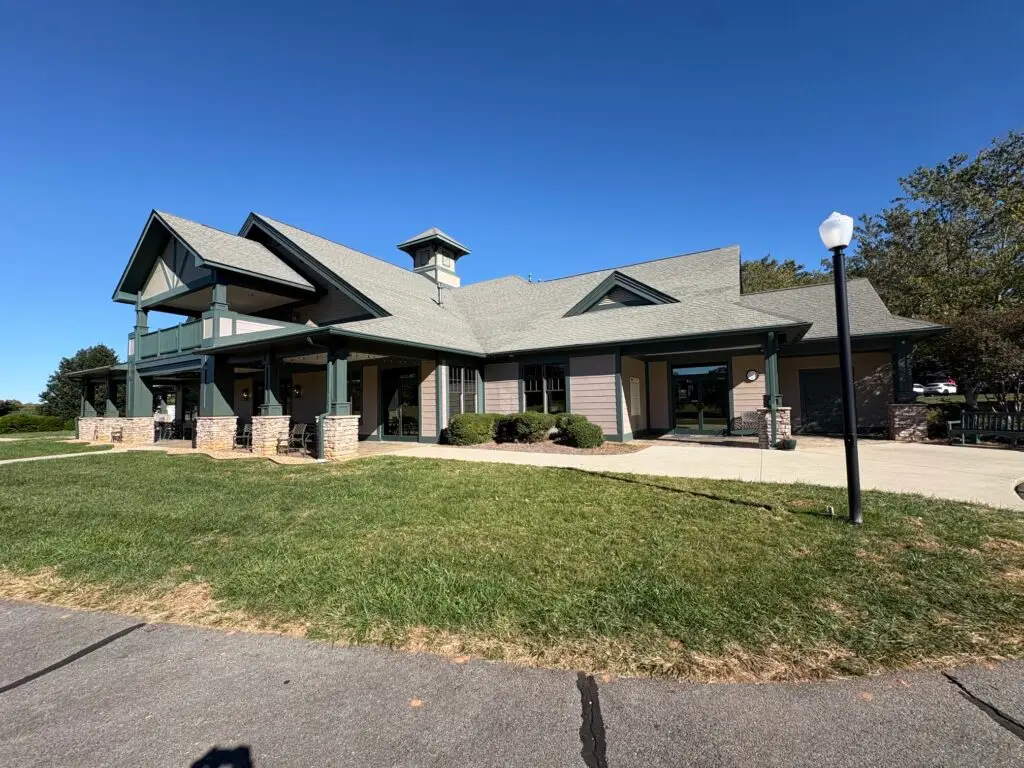

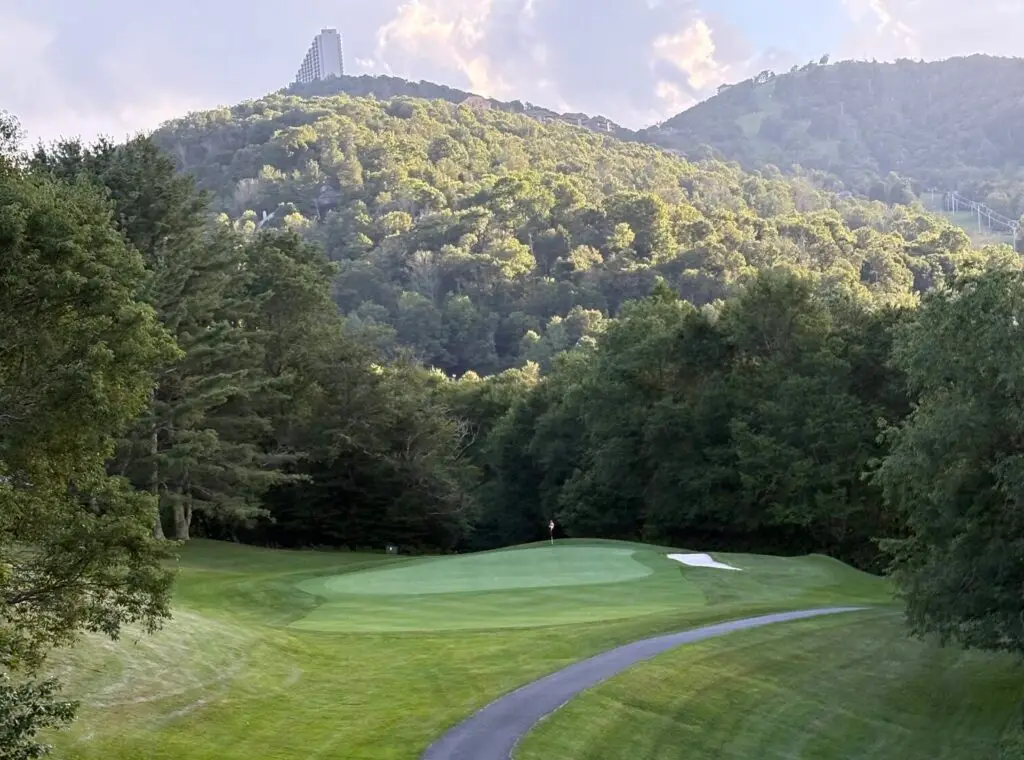
Sugar Mountain Golf Club may be the best “short” course anywhere.
The par-64 municipal layout that winds through the golf/ski resort community at 4,000 feet near Banner Elk offers some outstanding holes with beautiful views of the surrounding peaks, including Grandfather Mountain.
And the poa annua/bent grass greens have typically been just as fast as its exclusive Avery County neighbors, including those at Grandfather Golf Club and Linville Golf Club, High Country layouts notorious for quick putting surfaces.
I’ve played Sugar Mountain dozens of times. Tom McAuliffe, the course’s legendary general manager and clubmaker, is a longtime friend and a great sources for outstanding equipment at great prices.
So I was eager to play Sugar Mountain, which I hadn’t played since before Hurricane Helene flooded much of the course. Last time I toured the layout early in the spring, the par-4 16th was closed and under repair.
I made it happen over the weekend. And I got lucky (at least I considered myself lucky) because some recent heavy rains had slowed the greens. I hit one long downhill putt off the green, but getting it close had been possible.
The recovery at High Country courses has been amazing. I’ve seen Elk River, Hound Ears, Boone and now, Sugar, and each have recovered nicely with improvements.
Dail Golf of Greensboro handled the successful renovations/restoration at Sugar Mountain.
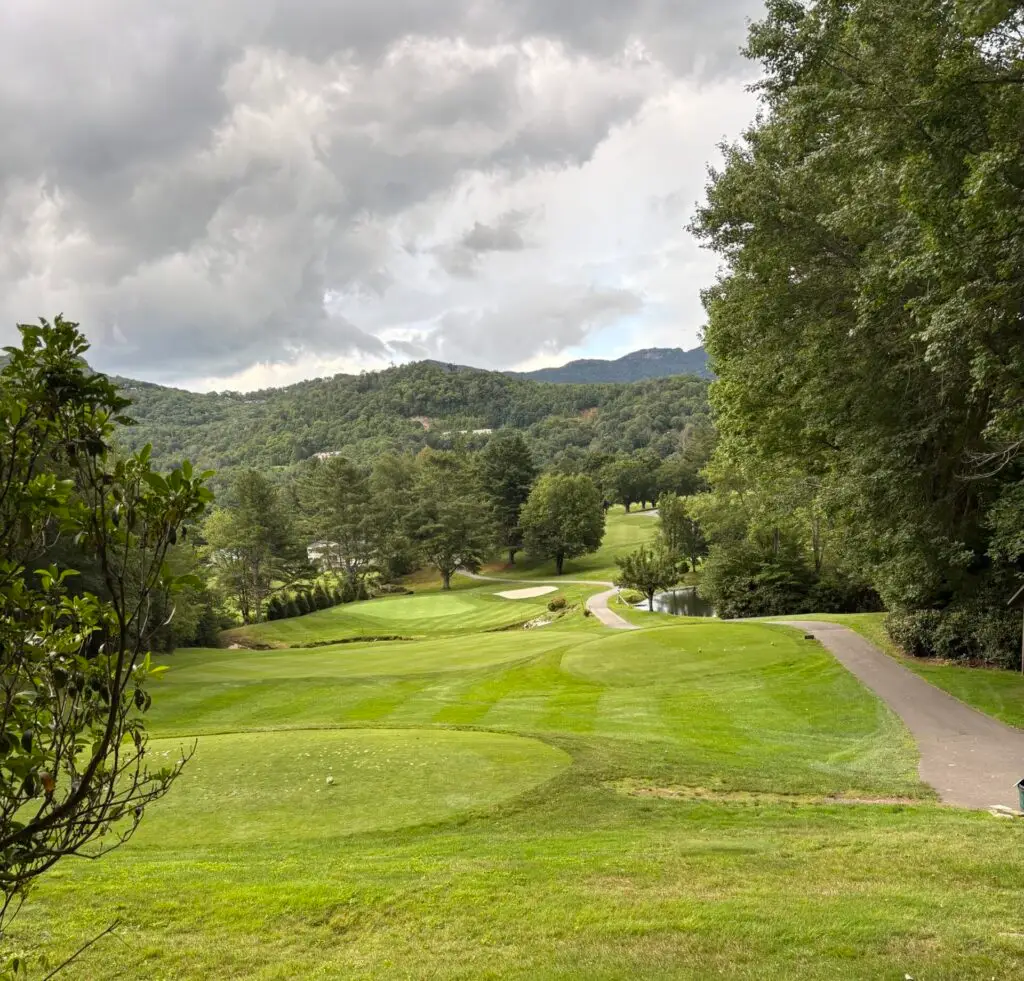
If you haven’t played Sugar, the nine par-3s are especially fun. The quality of the tee boxes, fairways and greens complexes, including newly rebuilt concrete capillary bunkers, matches those of top championship layouts. The landscaping and flowers on the tee box are a bonus.
No. 3, which measures about 145 from the tips, is a favorite. Hitting between a tunnel of tall trees on a hilltop tee box, players watch their shots cascade down to a green surrounded by a rhododendron forest and streams.
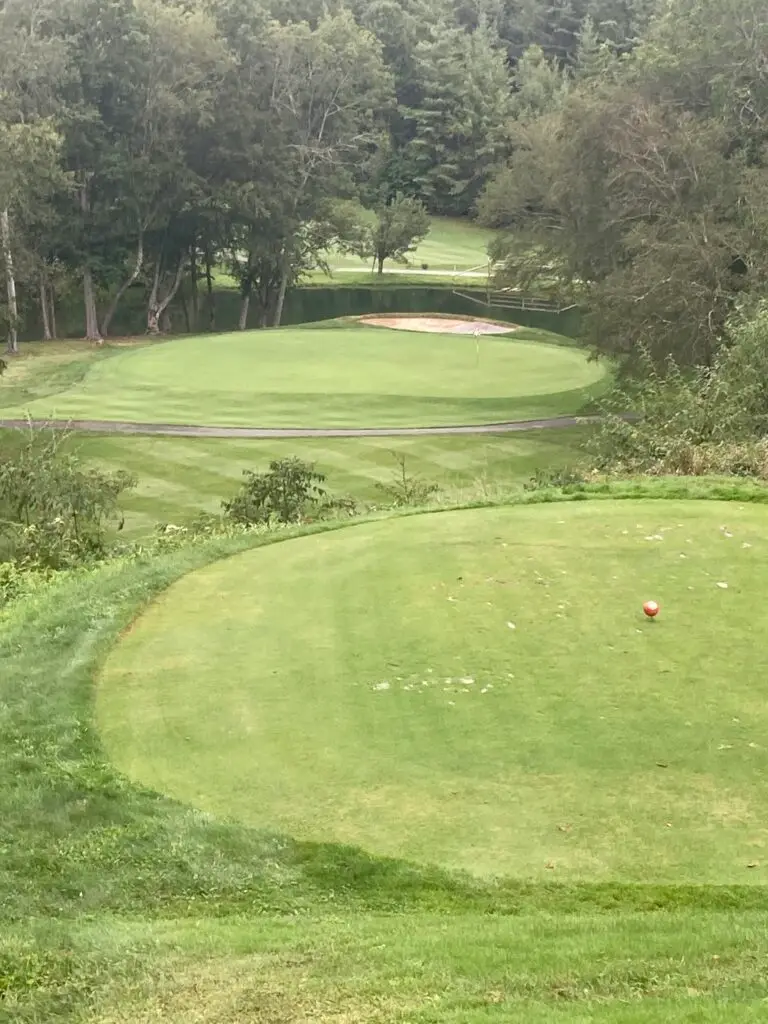
No. 10 may be the toughest of the bunch measuring 210 yards with bunkers protecting the front of the green.
No. 11, which stretches off to about 200 yards, requires an accurate shot to avoid wetlands that pinch in tightly agains the right side of the green. There’s a slope to the left that funnels balls down toward the green, but missing by more than a few yards leaves an exactly pitch off a hillside.
No. 16, a short par-4, was ravaged by flooding from the creeks that border both sides of the fairway and surround the green. The hole is open, but the green surface has yet to make a full recovery.
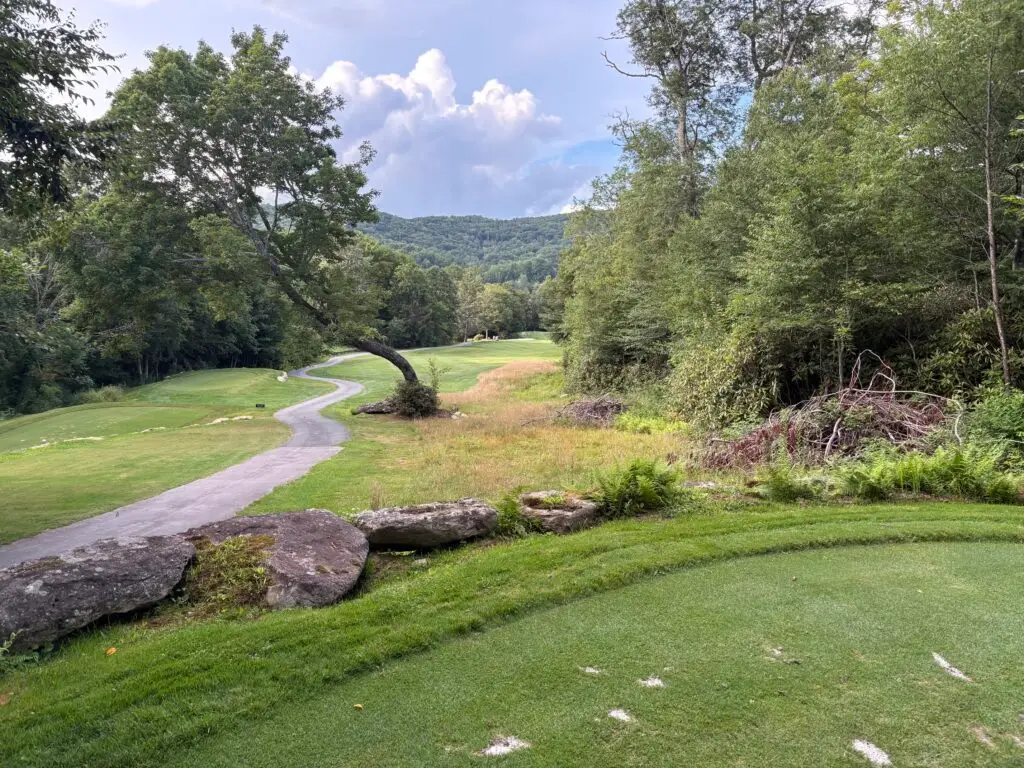
Perhaps the most unusual hole is No. 15, the course’s only par-5. Officially only 394 yards from the back markers, the hole’s steep incline and dogleg right surrounded by streams and wetlands make it a legitimate three-shot challenge for most players. Plus, the hilltop green slopes significantly from back to front.
Measuring about 4,400 yards, the course rating is 62.3 with a 111 slope. Frank Duane, former senior project manager for Robert Trent Jones, designed the course, which opened in 1974.
Greens fee and cart are $65 Monday through Thursday and $70 Friday through Sunday. Walking, difficult only on a few holes, is $43 on weekdays and $48 Friday through Sunday.