
Wednesday, May 6, 2026
spot_imgspot_img
Home Blog

Reynolds dominates at Starmount Forest; Oak Grove, North Surry, East Surry, South Stokes win regionals

Qualifiers unofficial, calculated from NCHSAA results

R.J. Reynolds High dominated Tuesday’s Class 7A Boys’ Central Regional at Starmount Forest Country Club.

Reynolds teammates John Daniel and Andrew Jenkins shared medalist honors with 73 for the Demons, who posted 303 and defeated second-place Cary by 11 shots. Only the top two teams qualified for the 36-hole championship next week at Pinehurst No. 8.

Page was third at 322 with Grimsley fourth at 324. Walter Millikan of Grimsley qualified as an individual with 75. Teammate Noah Yeary of Grimsley and Charlie Heinzelmann of Page qualified for the championship as individuals with 78.

Each of the state’s eight size classifications played three regionals, except 8A, which had only two regionals.


Class 5A Central

Oak Grove won the 5A Regional at Sapona led by medalist Lincoln Newton with 69. Aidan Wilson took third for Oak Grove at 72 with Tyler Lambert tied for fifth at 76.

Lathan Cobb of Western Alamance qualified with 76 and Hayden Hansen of North Davidson advanced with 78. Seaforth claimed the second team berth, 10 shots behind Oak Grove.

Class 5A and 6A will return to Sapona for their state championships.


Class 6A Central

Jack Weston was the medalist with 72 at 6A Central at Chapel Hill Country Club to lead Northern Guilford to 325 and the second qualifying spot, two shots behind East Chapel Hill. Southern Alamance was third, four behind Northern.

Timothy Klein of Walter Williams shot 75 to qualify as an individual. Bradyn Rogers shot 77 and Kaden Long and Lance Linch shot 80, each qualifying from Southern Alamance.


Class 8A Central

Northwest Guilford qualified in 8A with a third-place finish in the West Regional at Longleaf Club in Southern Pines. Brady Jones shot 69 and Cameron Harvey posted 72 for Northwest. Kevin Zhang of West Forsyth qualified as an individual with 72.

Hometown Pinecrest, which had the three top individuals, and Providence were the team qualifiers for Pinehurst No. 8. Pinecrest shot 6-under as a team. With only two regionals, three teams advanced. At 295, Northwest edged Myers Park by one shot.


Class 4A Central

North Surry beat Lake Norman Charter by one stroke to win the 4A Central team title at Asheboro Country Club. Logan Wall and Jackson Gardner tied for second with 78 for North Surry.

Connor Long of Forbush qualified with 80. Easton Hopper of Morehead made the championship field with 81.

Class 3A and 4A will play next week at Longleaf.


Class 3A Central

Tennessee commit Pennson Badgett of East Surry shot 68 at 7 Lakes near Pinehurst to win medalist at 3A Central. East Surry shot 305, beating second-place North Stanly by 31 shots.

Micah Faircloth and Riley Gooch shot 80 to advance for East Davidson. Ryan Martin of McMichael shot 82 to advance.


Class 2A Central

South Stokes won 2A Central with 310 at Pine Knolls, beating Franklin Academy by 11 strokes. Sawyer Slate shot 73 to finish second for South.

Levi Nelson and Aidan Stamper and Liam Wolschon of Bishop McGuinness tied for third at 76. McGuinness missed qualifying for the state championship by one shot. Class 1A and 2A play next week at Gates Four in Fayetteville.


Class 1A Central

Ryan Gray of South Alamance advanced from 1A Central with 82 at Siler City Country Club. Liam Gory shot 92 for Bethany Community. Vance Charter and Chatham Central were the team qualifiers.
Where I played this week: Gillespie Golf Course

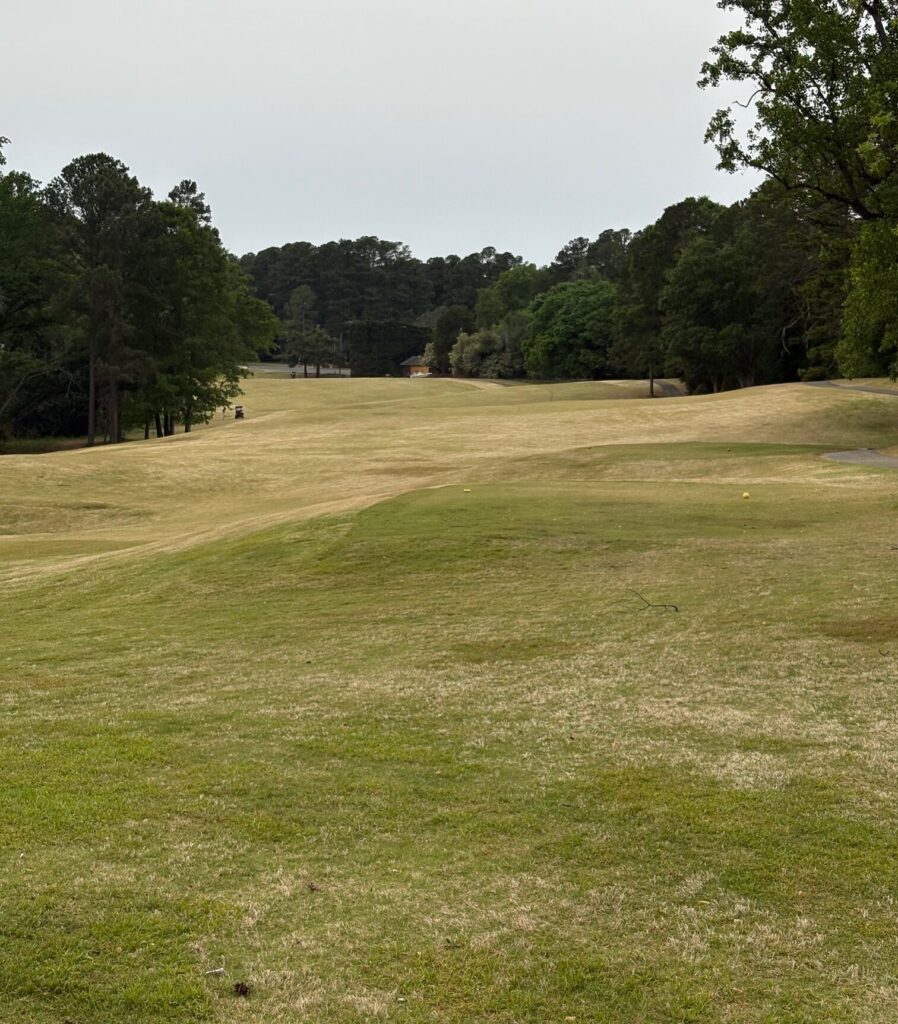
Gillespie Golf Course isn’t the fanciest golf facility in the Triad. It’s an historical, no-frills municipal golf course in a minority neighborhood bordering industrial properties.

But it might be the most important course in Greensboro.

There’s a lot to like about the nine-hole, par-36 layout only a few minutes south of downtown Greensboro. On Saturday, I made my first visit of the year to the course.

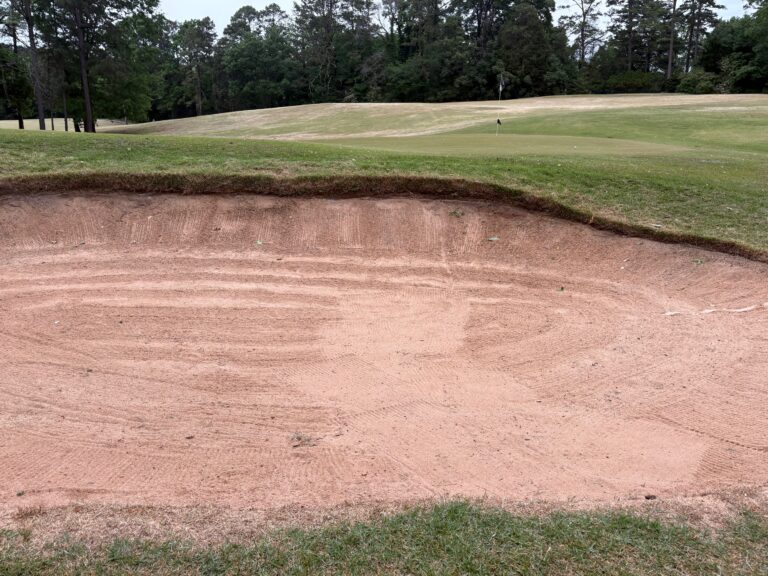
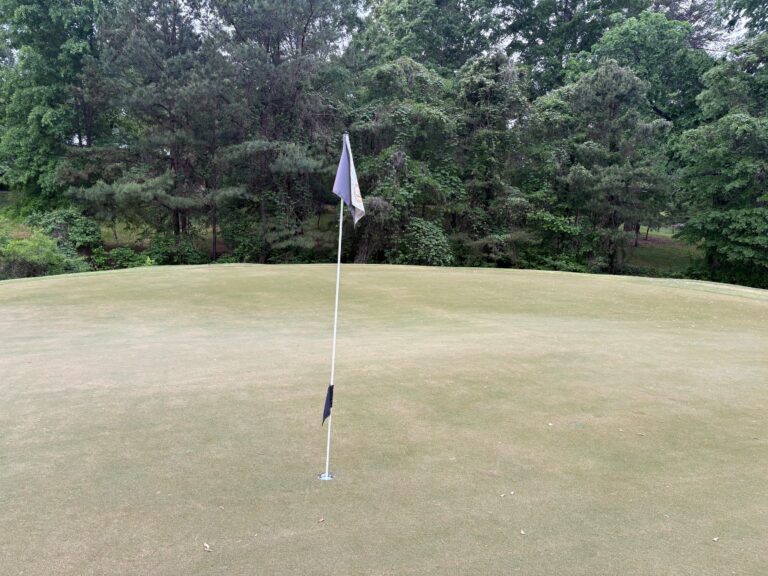
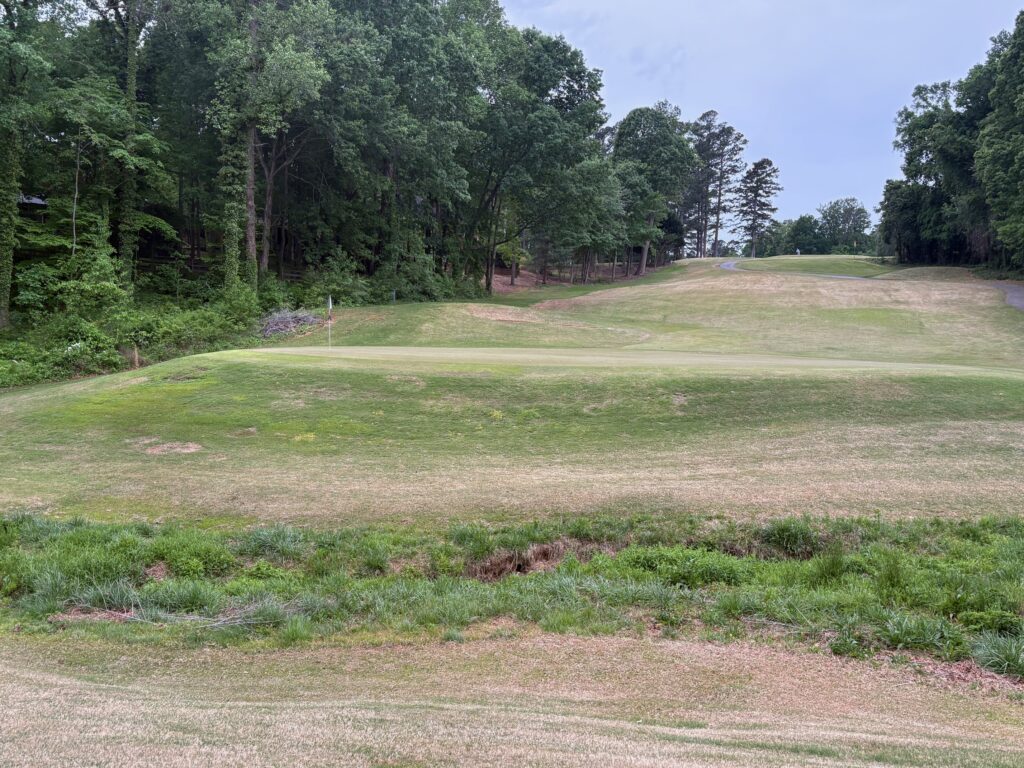
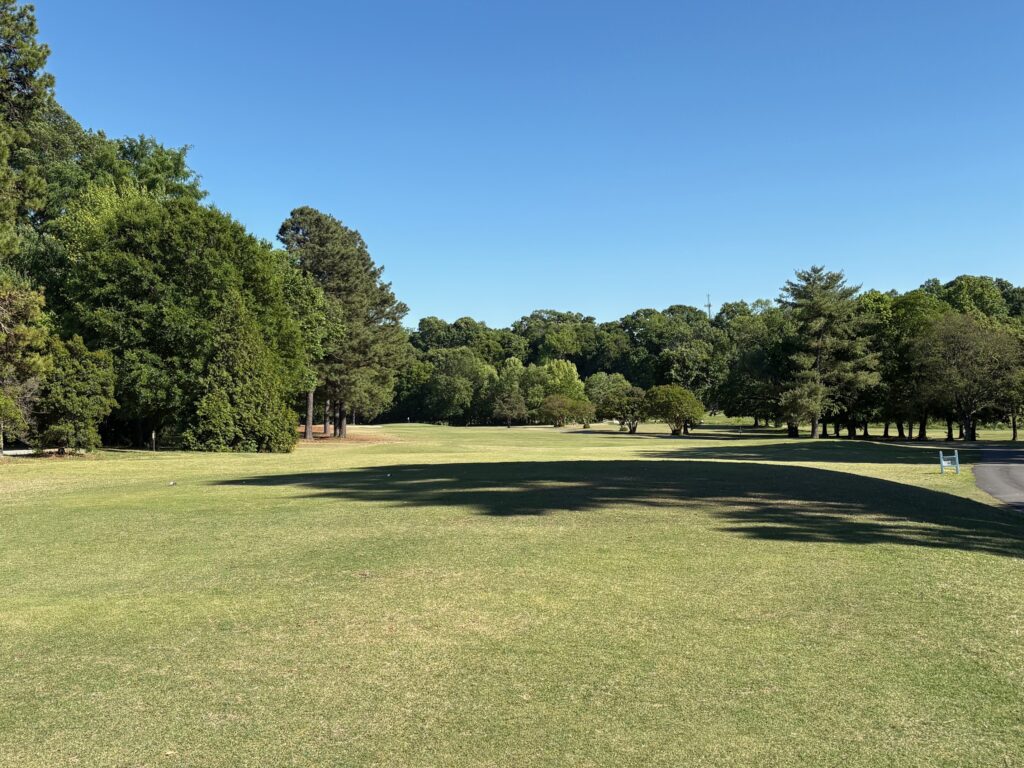
The routing is interesting, utilizing undulating terrain and a system of creeks to create a good mix of holes. The greens are small, but smooth and challenging. Despite the drought, I found well-maintained tees, fairways and greens.

Gillespie has a solid corps of regulars. The complex includes a spacious driving range, a chipping course and a practice green. The small pro shop has essentials — balls, gloves, tees and some equipment and apparel. Next to the pro shop is Par 3 Grill, a restaurant/snack bar leased out by the city.

Perhaps most appealing about Gillespie — the price. Walkers pay only $11. The price for nine holes with a cart tops out at $24 on the weekends. Seniors pay only $17 for 18 holes and a cart.

Plus, tee times are not always needed, especially in the afternoon. It’s fairly easy to walk in and either find playing partners or play by yourself. Got a couples hours free, you can typically find a play on the tee sheet.

I didn’t play at Gillespie until I’d been in the Triad for six years. Aware it was only nine holes and the prices were low, I figured it couldn’t be any good. As I’ve attempted to relay, I was wrong.

If I have limited time or want to practice, I play Gillespie. It’s not much more expensive than hitting a large bucket of balls. Plus, it’s a lot more fun. To score well, players will have to hit a variety of shots. It’s cliche, but it requires hitting most clubs.

Gillespie measures 3,322 (6,445 for 18) yards from the back tees, 3,193 (6,212) from the whites and 2,463 (5,017) from the reds. The course rating tops out at 70.5 with a 131 slope.

The opening hole, only 315 yards from the white tees, provides an excellent opportunity for players to get off to a good start.

There are few starter holes better than No. 1, a short, wide-open par-4 allowing players to spray drives to the right and still have direct short irons to the green.

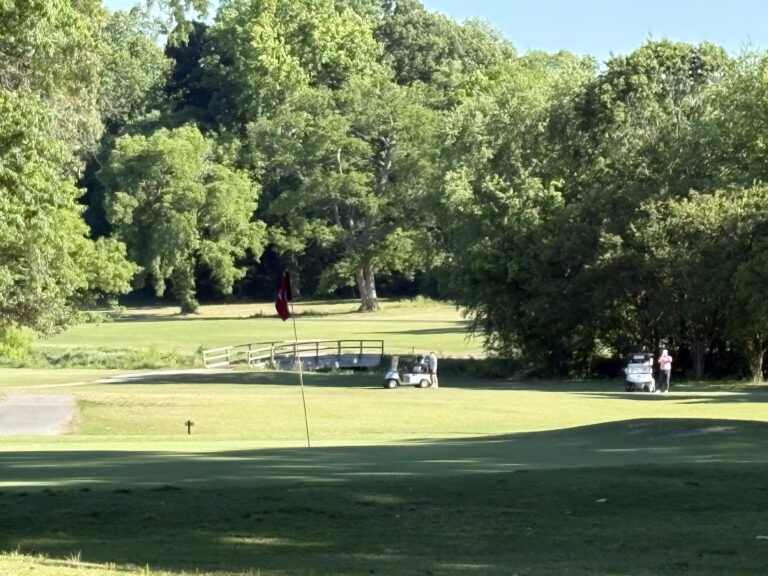
Players either hit draws on the dogleg-right No. 2 or face long approaches over a creek. Drives are drawn to the creek along the right side of the hole as if the water were a magnet.

The two par-5s are especially tricky, requiring precision second shots.

At the tee of the par-5 third, players must hit a solid fade over a creek. Then, an almost impossible second shot is required to the fairway sloping hard to the right and toward a creek. The only safe second shot skirts the trees on the left that will eventually fall to the low side of the fairway. The largest green on the course awaits with a steep left-to-right contour.

At the par-3 No. 4, a mid-iron is required to another dramatically sloped, small green sloping sharply off to the left that sends ball bounding off toward the driving range. Approaches hit left face a steep uphill pitch with a small target.

Nos. 5, 6 and 7 are par-4s featuring major undulations in the fairways and fast, sloping greens. At the par-3 eighth, players face a long par-3 measuring more than 200 yards from the back tees.

No. 9, a 560-yard dogleg right, requires two long accurate shots to get in position for an approach. Drives must avoid the creek that extends down the entire right side of the landing area. Reaching the green in two shots requires a tee shot of perhaps 250 yards near the creek and a faded second shot of more than 200 yards.

Bailouts to the right can leave carries of 150 yards to the left side of an angled, deceptive fairway. Shots hit to the open right side are left blocked by large oaks.

What else is there to like? Ball hunters usually can find replacements on balls hit into the creeks at Nos. 2 and 3. Different tee boxes are available for a second nine, though on a few of them — Nos. 3, 6 and 7 — the new tees offer awkward angles.

Gillespie is a fun place to play and an outstanding spot to hone your game.

Young continues climbs on world, Wake ladders

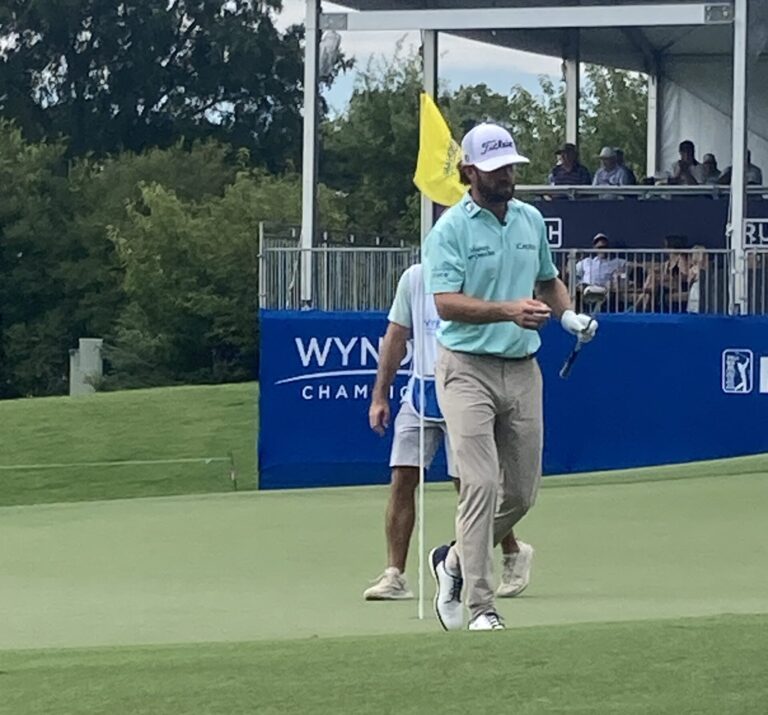
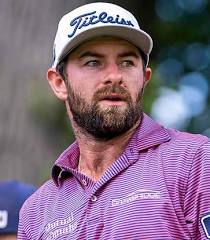
There was little question at any time Sunday that Cameron Young would win the Cadillac Championship at Doral’s Blue Monster, which he eventually did by six strokes over Scottie Scheffler, the world’s top-ranked player.

The major questions left: Where does Cameron Young rank among the world’s elite golfers? Will he become the best Wake Forest golfer since Arnold Palmer.

The Official World Golf Rankings put Young at No. 3, behind Scheffler and Rory McIlroy.

That’s fair. Hard to drop McIlroy after his second straight Masters victory followed by a playoff loss at Harbour Town. Or Scheffler, who began the year with a victory and has three straight second-place finishes as well as a third and tie for fourth.

Young has crept ahead of Matt Fitzpatrick who has three victories and a second-place finish sandwiched around a top 20 finish at the Masters.

So, Scheffler, McIlroy, Young and Fitzpatrick are the obvious top 4.

It’s now hard to image that Young came to Sedgefield last summer without a PGA Tour victory. Nine months later, he’s No. 3 in the world.

After breaking through in Greensboro, he’s gone 3-1 in the Ryder Cup and added victories in the Players Championship and Doral. He also tied for third at Bay Hill and the Masters.

As for his place in the Wake hierarchy, he has a ways to go. Since Palmer, who has seven major titles, Curtis Strange has two and Lanny Wadkins and Webb Simpson have one each. Jay Haas won nine times on the PGA Tour and had top 4 finishes in each U.S. major. Bill Haas won the FedEx Cup.

Young’s Wake teammate, Will Zalatoris, had runner-up finishes in the three U.S. majors, including a playoff loss to Justin Thomas in the 2022 PGA Championship, before back injuries began slowing him down.

There’s only one path left toward any march to the top for Young, who will turn 29 next week at the Truist Championship.

He needs to win a few major championships. He has three more chances this year.

Young in command; Smalley drops, but closes in on berth at Quail Hollow

Cameron Young took control while Alex Smalley dropped from contention at the Cadillac Championship, but Smalley remains in position to make a Signature leap on the PGA TOUR.

With his strong performance this weekend in South Florida, Smalley likely will qualify for next weekend’s Truist Championship, a Signature Event offering a $20 million purse to a field of about 80 players.

Otherwise, the Duke graduate who lives in Jamestown, would be one of 132 players competing for $4 million at the Myrtle Beach Classic.

Smalley shot 73 Saturday at Doral to drop from a tie for second into a tie for eighth, eight strokes behind Young. Thanks to a strong finish last week in the two-man Zurich Championship, Smalley held the No. 4 position in the Aon Swing 5, which takes the top five players in the last five non-Signature events.

Young shot 70 Saturday to improve to 15-under-par 201 through 54 holes.

Though Young, a former Wake Forest standout, has a six-stroke lead entering Sunday’s final round, he’ll play with Scottie Scheffler, the closest competitor, in the final group at 9:42 a.m. Tee times were moved up due to a forecast of inclement weather.

UNCG’s Hernandez successfully defends Southern Conference title

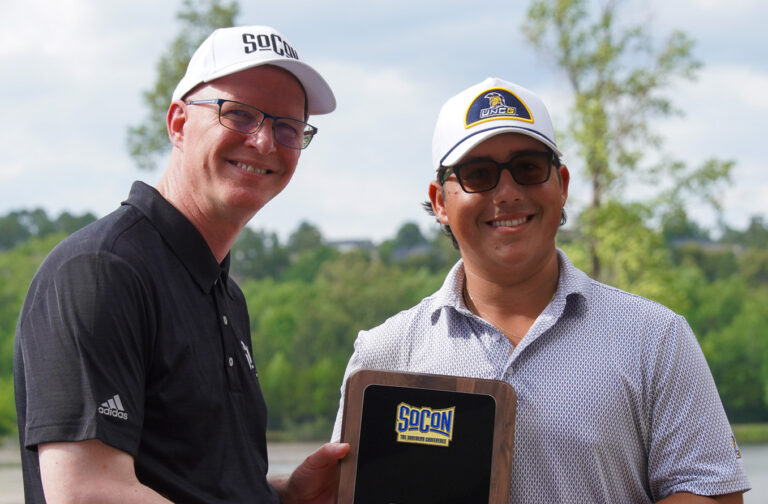
UNC Greensboro golfer Kelvin Hernandez won medalist honors for the second straight year Thursday at the Southern Conference Championship at Solina Golf Club, a course owned by YouTube stars Wes and George Bryan near Columbia, South Carolina.

Hernandez shot 9-under-par 204 for 54 holes. The Spartans shot 9-over to finish fourth in the team standings, 14 strokes behind champion Chattanooga.

With the victory, Hernandez will move on to the NCAA Regionals, probably at Bermuda Run Country Club.

Triad players top leaderboard at PGA Tour Doral tournament

The Triad boasted two names at the top of the leaderboard with Jordan Spieth on Thursday after the first round of the PGA Tour’s Cadillac Championship at Doral’s Blue Monster.

Cameron Young, a former Wake Forest standout, shot 64 on the Blue Monster to take a one-stroke lead over Alex Smalley, a Duke graduate who lives in Jamestown and plays out of Sedgefield Country Club. Spieth is tied with Smalley, who tied for second playing with Hayden Springer at the Zurich Classic.

Several of the Tour’s elite in are in the field in South Florida for the $20-million Signature event.

UNC, N.C. State, High Point will play at Finley; Wake sent to Tallahassee

North Carolina women’s golf programs were given their assignments Tuesday for the six NCAA regionals on May 11-13.

UNC, N.C. State and High Point will play at Finley Golf Club in Chapel Hill, where the Tar Heels are the No. 2 seed behind Texas. Wake Forest will serve as No. 2 seed behind Florida State at Tallahassee. Duke is the No. 2 seed at the University of Michigan.

The top five teams in each of the 12-team regionals will advance to the NCAA Championship May 22-27 at Omni LaCosta Resort & Spa in Carlsbad, California.

Zoe Duval of Appalachian State, Victoria Levy of UNC Wilmington and Carolina Patterson of UNC Asheville were among the six individuals selected to play at Finley. Virginia Tech, with Mebane’s Emily Mathews, and Western Kentucky, with Greensboro freshman Leah Edwards, will play at the University of Louisville.


Virginia beats UNC, Stanford to win ACC men’s championship

Virginia pulled out a victory over North Carolina Monday to advance to the final of the ACC Match Play Championship at Shark’s Tooth Golf Club near Panama City, Florida. The Cavaliers triumphed over Stanford 3-1 in the afternoon for the championship

The third-ranked Cavaliers finished a few holes of a close contest with the eighth-ranked Tar Heels, winning 3-2 in a semifinal suspended by darkness Sunday. Andrew Riley and Carson Bertagnole won matches for UNC. Stanford had won the stroke play portion of the tournament.

Baker, Kidd win Lexington Two-Ball tourney

Anthony Baker and Steve Kidd shot rounds of 61 Saturday and 66 Sunday to win the 2026 Spring Two-Ball Tournament at Lexington Golf Club at 15-under-par 127.

Michael Swaringen and Ryan Burke finished second at 131 followed by Jamie Gilley/Brant Stovall; Cade Cranfield/Brady McIntyre; and Derek Lipe/William Little at 135.

The field attracted 94 players on 47 two-player teams.

Where I played this week: Lexington Golf Club

(This is the second of a new weekly feature on TriadGolf.com. Each weekend, editor/publisher John Brasier will share his experience that week playing at a Triad course open to the public.)

Lexington Golf Club isn’t the longest or most difficult golf course in the Triad. But it might be the most loved.

Built in 1938 by former Carolinas PGA president Dugan Aycock, the municipal course is the center of golf activity in Lexington and beyond. The property, part of a nice tree-filled neighborhood not far from the center of downtown Lexington, attracts not only players from Davidson County, but draws from as far away as Charlotte and Greensboro.

This past weekend, Lexington played host to a best-ball tournament. Later in the year, the calendar always includes the Davidson County Championship and the Barbecue Festival Tournament, which fills up far in advance.

Measuring only 6,116 yards from the tips, Lexington is deceptively challenging, but can be enjoyed by all levels of players. The hilly terrain (blind shots and fairways that seem generous, but often have sharp slopes heading toward woods) as well as challenging, undulating greens defend par against big hitters. Missed greens often leave difficult chips to putting surfaces perched atop a hill bank.

Shots rolling through the green on the par-3 16th face either a difficult chip or a penalty.

Not too long for beginners, Lexington is an ideal layout for low-handicap seniors and other good players who lack the distance to tackle 7,000 yards.

The course is typically kept in mint condition. The routing, fairways and greens complexes are championship caliber. Bring a range finder, marked sprinkler heads are hard to find.

It’s not always possible to get a morning weekday time or a weekend time at Lexington — and with good reason.

This was only my second round at Lexington, but I’ve covered some tournaments there. Playing April 25 in the midst of a drought, I found well-grassed Bermuda fairways — they should be dark green in a few weeks) with the Champion Bermuda greens surfaces, new last year, smooth and in mint condition. If there was a rough spot on the course, it was covered by new sod brought in to fix it.

The course’s bunkers, often cut into mounds, were meticulously edged. Late on Saturday, I didn’t see a single footprint in the sand — as I mentioned earlier, the regulars love their course.

The cost for Saturday afternoon was $33, including cart. The early times on weekends are $41, including cart. Take $15 off if you choose to walk (several players do). Greens fees are $19 and $24 (add $15 for cart) on weekdays. The all-day senior rate, including cart on weekdays is $28.

Though an everyman’s facility, patrons often fill a separate room with chairs and a TV in the brick pro shop. The atmosphere is friendly, homey and clean, but non-pretentious. On my unannounced arrival, I found golf pro Dylan Dawson washing returned carts.

Soft drinks and sports drinks in 24-ounce bottles sell for $2.50. Needing a few balls, I paid $4 per ball ($48 per dozen) for three new Pro VIs with logos. That’s a good deal considering a dozen new Pro V1s retail for $58.

Playing as a single, my Saturday afternoon round, coming after the first round of the course’s Spring 2 Ball tournament, took only 3 hours, 15 minutes. There were players on the course, but the pace was comfortable. My timing was good. The threat of a storm teased throughout the back nine, perhaps speeding play and discouraging a few potential afternoon players.

The rolling terrain makes it important to land the ball in the correct portion of the fairways.

Playing the 5,661-yard white tees (I should have played blue), Lexington got the best of me. Though there was plenty of grass, the hard ground was difficult to navigate for a stranger. On the second hole, a 295-yard dogleg left with a creek in front of green, I hit a nice draw with a 4-iron that I watched roll all the way through the fairway into the creek.

It was that kind of day. I should have kept hitting irons off the tees, though my best drive made it to the front fringe on No. 13, a 316-yard hole. Some of the pin positions were especially tough, possibly due to the best-ball tournament.

My favorite holes were No. 9, a 393-yard uphill par-4 with the flag, but not the green visible on the approach; and Nos. 11 and 16, two downhill par-3s measuring 218 and 182 yards, respectively.

Driving home, rain started to fall. Maybe the fairways will be softer this week.

I’m telling myself that I caught Lexington on a tough day. At least, I hope I did. But I’m looking forward to returning with improved swing and course management. I can understand the love felt by the regulars.